
What Is the Price of a Jet Pump for a Borewell? A 2026 Cost Map for Buyers
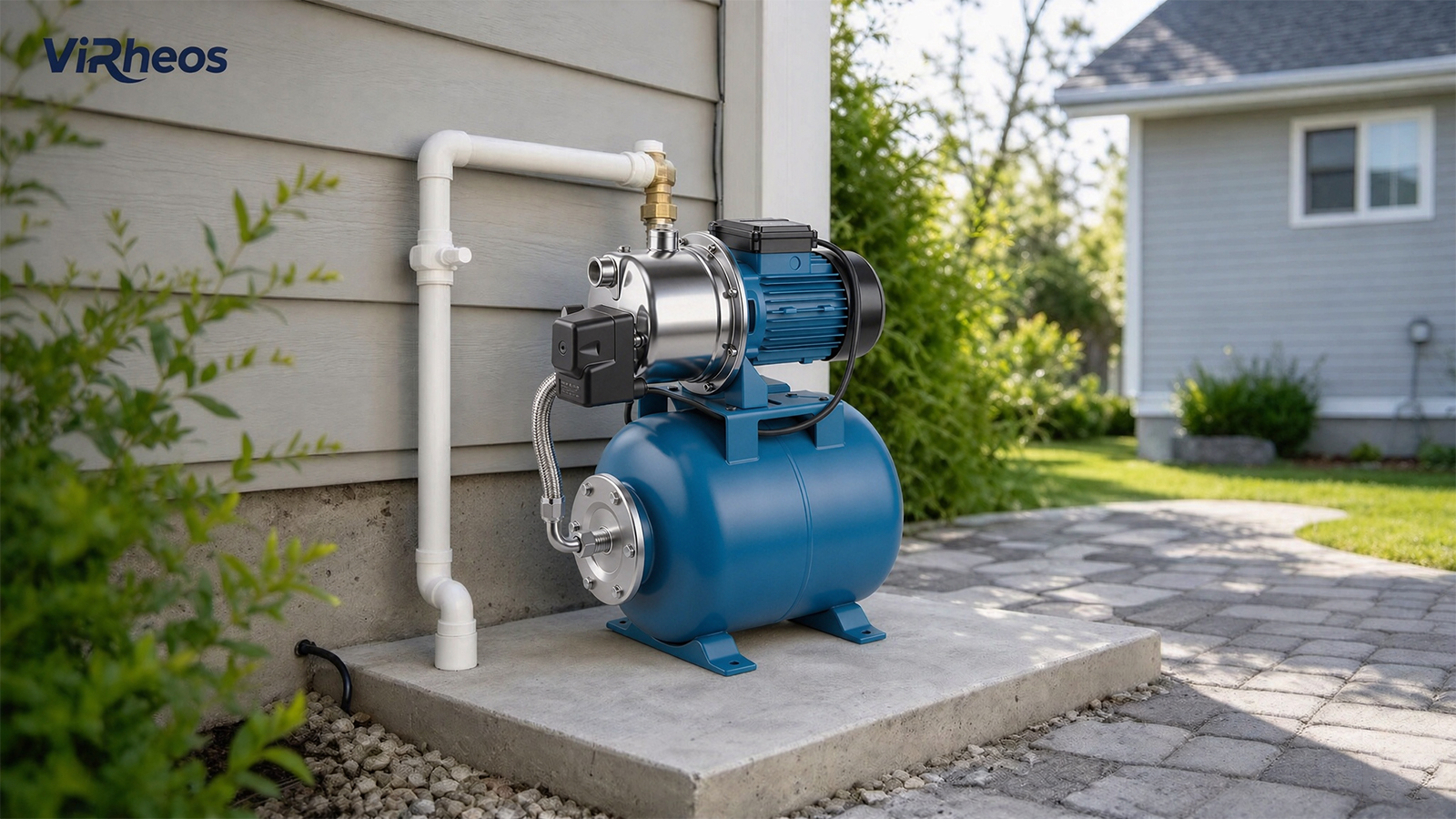
Ask three suppliers what a borewell jet pump costs and you get three figures that barely resemble one another. One quotes the bare unit. Another includes a tank, a switch and a foot valve. A third prices a two-pipe ejector for a deeper borehole. None is wrong; they quote different scope. The useful question is which configuration, at what depth, on what terms, with which papers in the carton.
That distinction is the whole margin for a distributor or project buyer. ‘Borewell’ is South Asian English for a drilled tube well; most demand sits in irrigated agriculture. A jet pump pulls water up a suction pipe instead of pushing from below, so the water level decides both the configuration and the bill. This guide maps published 2026 price bands, the depth rule, quotation drivers and the costs absent from an invoice.
The short answer
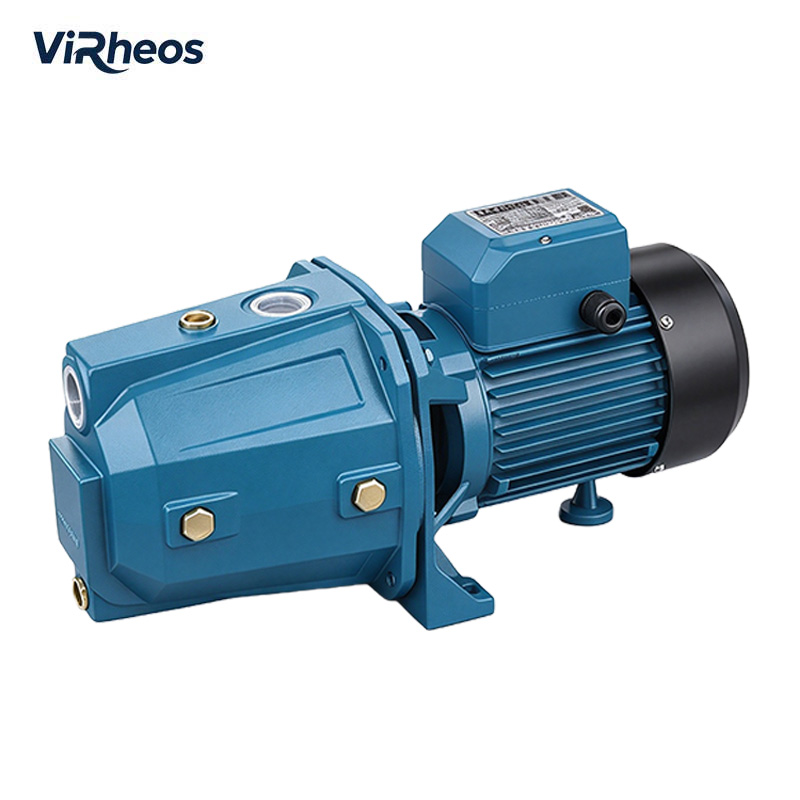
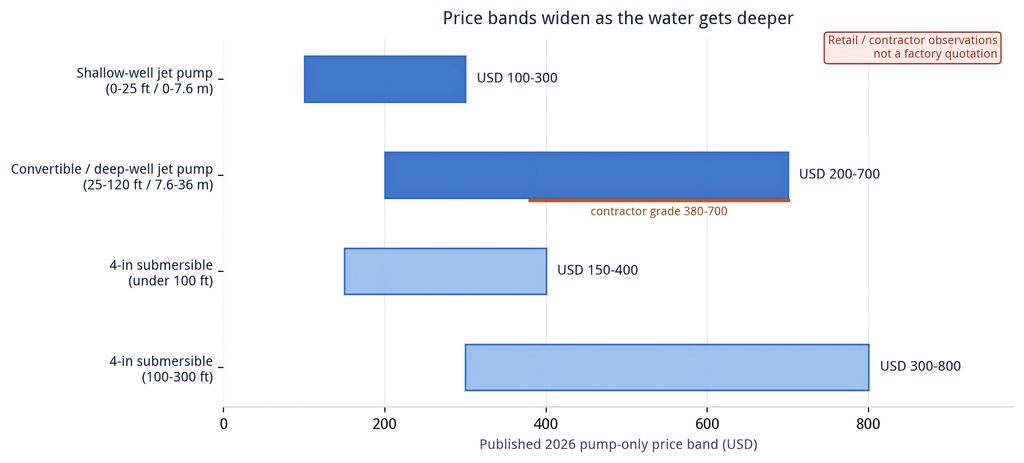
Short answer: published 2026 U.S. observations put a 0.5-1 hp shallow-well jet pump near USD 100-300 for the unit, or USD 300-600 installed. Full-system estimators quote USD 800-2,000 for a shallow replacement and USD 1,200-3,000 for a deep-well installation. A convertible or deep-well unit sits around USD 200-500, contractor-grade listings higher. Factory landed prices for volume orders are lower, and hinge on voltage, certification, materials, MOQ and Incoterms. Depth moves the number first.
Table 1. Published 2026 price bands for borewell pump options, pump-only and installed.
| Configuration | Static water level | Pump-only (USD) | Installed (USD) | What is usually in the box |
| Shallow-well jet pump | 0-25 ft / 0-7.6 m | 100-300 | 300-600 basic; 800-2,000 full replacement | Pump, 30/50 switch; tank and foot valve often separate |
| Convertible / deep-well jet pump | 25-120 ft / 7.6-36 m | 200-500; 380-700 contractor grade | 400-900 basic; 1,200-3,000 full system | Pump, ejector kit, two downhole pipes, foot valve |
| 4-in submersible, under 100 ft | Below ~30 m | 150-400 | 400-800 | Pump, cable, control box, drop pipe |
| 4-in submersible, 100-300 ft | 30-90 m | 300-800 | 700-1,600 | Longer cable and drop pipe, lifting gear |
How much does a jet pump cost?
The honest answer is a range, because the phrase covers three bills. A shallow-well unit is a single-pipe machine with the ejector in the pump body. Add a downhole ejector and a second pipe and you have bought a kit. Add a tank, a switch, a foot valve, unions and sealant and you have bought a system. Table 1 shows the progression: USD 100-300 bare, USD 200-500 convertible, USD 300-900 installed.
Two traps sit inside those figures. Horsepower buys flow, not depth: a 1 hp unit and a 0.5 hp unit share the same ~25 ft suction ceiling. The bigger motor costs more and delivers more gallons per minute, but cannot reach deeper water. The bare-unit price also omits the small parts that make a borewell work. A foot valve, gasket, correctly sized tank and sealant can double the equipment bill before labour.
For B2B buyers the better figure is landed cost per usable duty point. Ask what the quotation covers: pump, ejector kit, switch, tank, spares, test report, carton and freight term. Two jet pump quotes USD 40 apart on unit price can land USD 400 apart at the warehouse door.
Why the borewell, not the pump, decides the budget
Borewell is the term used across India and much of South Asia for a drilled tube well. India’s 2024 national groundwater assessment put annual recharge at 446.90 billion cubic metres (BCM), extractable resource at 406.19 BCM and total extraction at 245.64 BCM – a stage of extraction of 60.47%. The 2025 assessment reported 247 BCM extracted, of which 215 BCM (87%) went to irrigation, with 281 districts above the national average.
Those figures are not abstract. Karnataka’s Economic Survey 2024-25 reported close to 60% of net irrigated area served by borewells, up from about 37% a decade earlier. Heavier extraction pulls water tables down. Each metre pushes the specification from a single-pipe surface unit toward a two-pipe ejector or a downhole machine, adding hardware, pipe, cable and labour. The price of a jet pump for a borewell is the price of a depth, plus the season it was measured in.
- Source: Ministry of Jal Shakti / Central Ground Water Board, National Compilation on Dynamic Ground Water Resources of India, 2024 (446.90 BCM recharge; 406.19 BCM extractable; 245.64 BCM extraction; 60.47% stage), released 2025; Assessment 2025 (247 BCM; 215 BCM / 87% irrigation; 281 districts above average); Karnataka Economic Survey 2024-25 (about 60% of net irrigated area by borewells).
How deep will a jet pump pump water?
About 25 ft (7.6 m) of vertical suction lift for a single-pipe shallow-well jet pump, measured from the pump inlet to the standing water surface, not the bore bottom. At sea level the weight of air can hold a 33.9 ft water column in an ideal vacuum. Friction, fittings and altitude bring field guidance to 22-25 ft, with roughly a foot of lift lost per 1,000 ft of elevation. A bigger motor does not move that ceiling.
A deep-well jet pump moves the ejector down the bore. One line sends pressurised water down; the other returns the mixed flow. Published ceilings vary for a reason: well-service literature quotes 90-120 ft for a single-stage ejector, extension publications describe 250 ft installations, and trade guidance allows several hundred feet with the right ejector. Each is defensible. Efficiency is what changes: flow falls away as lift grows, so most borewell projects switch to a submersible well before the outermost limit.
Here is the price connection. Under 25 ft you buy one pump, one suction line, one foot valve. From 25 to about 120 ft you buy an ejector kit, a second downhole pipe, more joints to seal, more labour, and more energy per cubic metre, since part of the discharge returns through the nozzle. Beyond that, pushing from below wins on flow and running cost. The answer to ‘how deep’ is also the answer to ‘how much’.
What you actually pay for: the landed-cost stack
A factory quotation is a bill of materials plus a bill of proof. On a surface jet pump the big physical lines are the motor, the cast-iron or stainless volute, impeller and diffuser, ejector nozzle, mechanical seal, capacitor, pressure switch and carton. Copper dominates the motor winding; iron and stainless dominate the wet end. When metal moves, the quotation moves.
World Bank data show copper averaging USD 9,142 per tonne in 2024 and USD 9,947 in 2025, then USD 14,474 in September 2026 – about 45% above September 2025. Aluminium rose from USD 2,419 to USD 2,632 across the same annual averages. That is why suppliers shorten quotation validity when metal is volatile. Electricity matters too: U.S. EIA 2025 averages were 8.51 cents/kWh industrial, 13.37 commercial and 13.56 across all sectors, up from 12.94 in 2024.
On top of materials sit the proof lines: a numbered test to a named ISO 9906 grade, an efficiency declaration, a potable-water material listing, a thermal-protection check, and language and carton marking for the destination market. None changes the hydraulics; all change the number. A cheap jet pump without a test sheet is not the same product as one with a grade 2B curve.
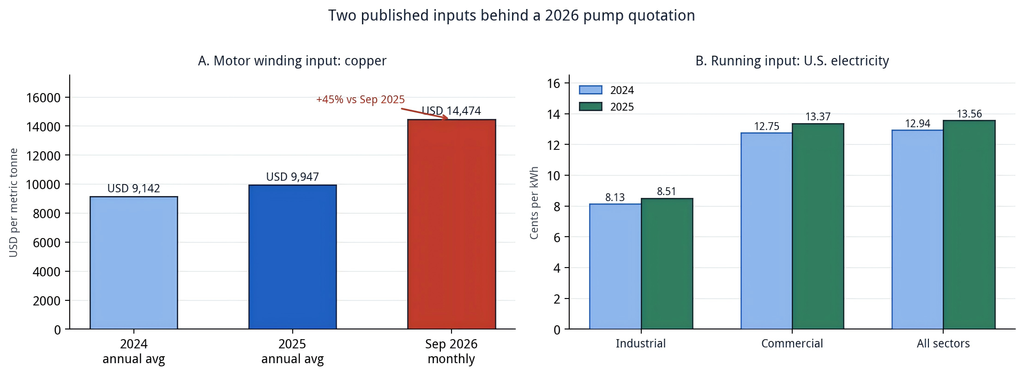
Source: World Bank, Commodity Markets ‘Pink Sheet’ / Commodity Markets Review, 2024-2026 releases (copper USD 9,142/mt in 2024, USD 9,947/mt in 2025, USD 14,474/mt in September 2026; aluminium USD 2,419 and USD 2,632/mt); U.S. EIA, Electric Power Monthly, Table 5.3, through August 2026 (2024: 12.94 all sectors, 8.13 industrial, 12.75 commercial cents/kWh; 2025: 13.56, 8.51, 13.37).
Table 2. Eight lines in a factory quotation, and what each one does to the price.
| Quotation line | State this in the enquiry | Documented range or fact | Effect on the number |
| Motor and supply | Voltage, phase, frequency, start rate | 115/230 V 1-phase or 230/400 V 3-phase, 50/60 Hz | Dual-voltage and 3-phase builds add winding and control cost |
| Wetted materials | Casing, impeller, seal grades | AISI 304 for clean water; 316L for brackish | 316L and mechanical seals step the unit price up |
| Ejector configuration | Shallow, convertible or two-pipe deep | ~25 ft single pipe; 90-120 ft downhole ejector | A second downhole line adds parts, pipe and labour |
| Test evidence | Q/H curve plus acceptance grade | ISO 9906 grades 1B / 2B and serial-numbered report | Tighter grades cost more to test and machine |
| Efficiency declaration | MEI where the market requires it | EU MEI >= 0.40 under Regulation (EU) 547/2012 | Higher-efficiency builds carry a premium |
| Certification pack | Safety and potable-water listings | IEC 60335-2-41:2024; NSF/ANSI 61 | Each listed component adds approval cost |
| Commercial pack | MOQ, Incoterm, lead time, spares list | Ejector kit, seal, capacitor, foot valve, gasket | MOQ and freight terms move landed cost most |
| Price validity | Days valid and metal adjustment clause | Copper USD 9,142 (2024) to USD 14,474 (Sep 2026) | Long validity in a rising metal market carries risk |
The price after the invoice
Purchase price is the visible part. A 0.75 kW motor running 2,000 hours a year at the 2025 U.S. all-sector average of 13.56 cents/kWh uses 0.75 x 2,000 x 0.1356, or about USD 203 a year – roughly USD 2,030 over ten years, several times the pump-only band in Table 1. That is a worked illustration on one published tariff, not a metered site result; hours, duty point and tariffs change it. The invoice is not the end of spending.
The aftermarket confirms it. Grand View Research valued the global water pump repair and maintenance segment at USD 9,471.9 million in 2025, forecast at USD 12,990.7 million by 2033 (4.3% CAGR). Asia Pacific led in 2025 and India is the fastest-growing country market to 2033. Across the whole market, direct sales took 53.3% of 2025 revenue – a hint that buyers of configured systems prefer the factory. The 2025 market was USD 74.5 billion, heading to USD 103.3 billion by 2033.
For a jet pump the recurring lines are concrete: a foot valve, a priming gasket, a mechanical seal, a capacitor, a pressure switch, and the call-out after a power cut when the unit loses prime. The parts are cheap; the visit is not. Bundling them into the original order is the cheapest maintenance programme a distributor will write.
- Source: Grand View Research, Water Pump Market Size and Share Report 2026-2033, April 2026 (2025 USD 74.5 bn; 2033 USD 103.3 bn; 4.4% CAGR; direct sales 53.3%; Asia Pacific 45.2%; agriculture 24.0%); Grand View Research, Repair & Maintenance – Water Pump Market Statistics, 2026 (USD 9,471.9 M in 2025 to USD 12,990.7 M by 2033, 4.3% CAGR).
Two worked borewell quotations
The figures above are published or measured; the examples below are worked illustrations built on those bands and Note 5, not third-party quotations.
Case A – shallow farm borehole. Static water sits 4.2 m down in October, 6.5 m in April. A 0.75 hp shallow-well jet pump on a 1 in suction line, with foot valve, 30/50 psi switch and 60 L tank, stays inside the 7.6 m envelope. On 2026 bands the unit is about USD 100-300; tank, valve and fittings take hardware to USD 400-600 before labour. A spare seal, gasket and foot valve add a few dollars. Two seasons on, a pinhole at a wellhead union draws air in. Sealant and a re-prime fix it. Cheap parts, costly visit.
Case B – village supply borehole at 32 m static, drawing down to 38 m at peak. A two-pipe ejector can be quoted near USD 200-500, but the ejector kit, second downhole pipe, extra joints and longer commissioning lift the installed line while flow fades each dry month. The order moves to a 4-in stainless multistage machine set 6 m under the lowest pumping level, with cable, control box and a numbered test sheet: USD 300-800 pump-only, USD 700-1,600 installed. No priming step; one lift-in replaces a day chasing leaks. The lower-looking quote was not the lower-cost borewell.
Where a jet pump sits in a surface-pump programme
In most catalogues a jet pump is filed with peripheral, monoblock and booster units on a shared motor platform, the same switch and tank hardware. One spares kit and one translated sheet can cover several article numbers. That yields a clear price ladder: a shallow unit is the entry rung, a convertible build adds an ejector kit and a second pipe, a two-pipe arrangement adds hardware and installation hours. Downhole machines belong to a separate family with sealed motors, cables and IP68 tests.
For OEM and ODM work, the cost levers are set before sample approval: voltage and frequency, nameplate and manual language, carton marking, certification references, spares pack and MOQ. Validate one sample against its Q/H curve, temperature rise and noise, then freeze the build. Changing a winding or material after approval is where a jet pump programme quietly loses margin. Ask for price validity in days, linked to a published metal reference. With copper moving as it did in 2025-2026, a 90-day fixed quote is either generous or already padded.
Certificates, test grades and the price of proof
Standards are cost lines, not decoration. ISO 9906 defines hydraulic acceptance grades (1B, 1E, 1U, 2B, 2U, 3B); holding a tighter grade means more machining and test-rig time. A curve with no grade and no serial number is a sales drawing. IEC 60335-2-41:2024 sets safety requirements for household and similar electric pumps, abnormal operation and thermal protection included. IEC 60034 or NEMA MG1 covers the motor, NSF/ANSI 61 the drinking-water contact parts, AISI 304 or 316L the stainless grade.
For EU shipments, Regulation (EU) 547/2012 uses the Minimum Efficiency Index as a floor: at MEI >= 0.40 the least efficient 40% of surveyed pumps are excluded. ESPR, in force since July 2024, has a review of pump rules under way. Leave headroom above that floor so a jet pump does not need re-quoting when the threshold rises. None of this is a calculation to optimise; it is a document list. A supplier that assembles all of it in one PDF tends to quote more consistently.
- Source (Note 5, engineering basis): depth and pressure limits are long-standing physical guidance compiled by the National Ground Water Association, Nebraska Extension G2152 and the NWCG drafting manual (14.7 psi; 33.9 ft theoretical; 22.5 ft attainable; about 25 ft in service). Product references: ISO 9906, IEC 60335-2-41:2024, IEC 60034, NSF/ANSI 61, EU Regulation 547/2012 with MEI >= 0.40, ESPR (July 2024). All statistical, regulatory, commodity and hydrological figures above come from 2024-2026 releases.
Getting a usable price from a factory
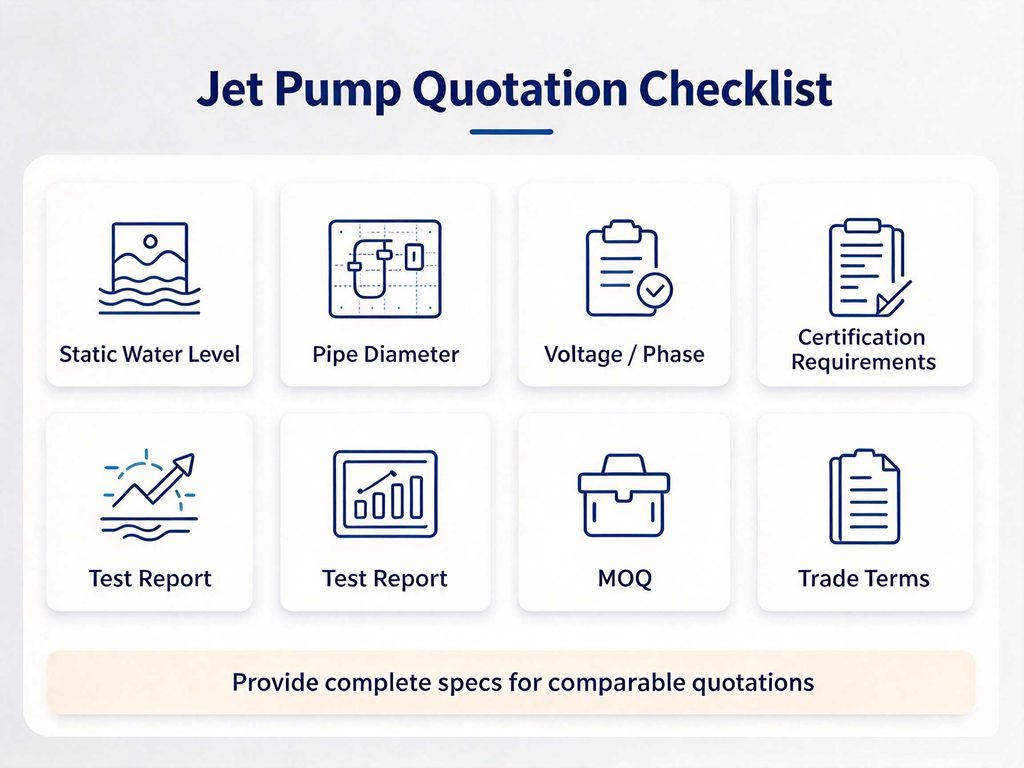
A request that says only ‘jet pump for borewell, 1 hp’ invites a figure that cannot be compared with anything. Six lines make replies comparable: static water level in the driest week and casing diameter; duty point with pipe friction; voltage, phase and frequency; configuration (shallow, convertible or two-pipe deep); certification and test documents; and quantity, Incoterm, packing, spares list and price validity in days. Name the destination market so the correct certificate references are confirmed at quotation stage.
Send the same six lines to two or three qualified manufacturers. Compare the documents beside the figures, not just the last row. On a borewell project the lowest unit price with the thinnest paperwork is rarely the cheapest system to commission and keep running. A precise enquiry also removes the guesswork a supplier builds into the offer.
Frequently asked questions
- What is the price of a jet pump for a borewell?
- Published 2026 observations put a 0.5-1 hp shallow-well unit at USD 100-300 pump-only and USD 300-600 installed; full shallow replacements are quoted at USD 800-2,000 and deep-well jet systems at USD 1,200-3,000. Volume factory prices are lower and depend on voltage, materials, certification, MOQ and Incoterms. Depth is the first variable: under 25 ft is cheapest, while a two-pipe ejector costs more.
- How much does a jet pump cost?
- As a unit, roughly USD 100-300 for shallow-well and USD 200-500 (sometimes USD 380-700 contractor grade) for a convertible or deep-well arrangement in 2026 published bands. As a working system, add a tank, switch, foot valve, ejector kit if needed, pipe, fittings and labour. Ask what is in the box before comparing two figures.
- How deep will a jet pump pump water?
- About 25 ft (7.6 m) of vertical suction lift for a single-pipe shallow unit, measured to the standing water surface. A deep-well jet pump with a downhole ejector is commonly quoted at 90-120 ft; extension guidance goes further, but flow drops sharply and most buyers move to a submersible first. More horsepower adds flow, not depth.
- Why do two quotes for the same pump differ so much?
- Usually scope, not greed. One may be pump-only; another may include the tank, switch, ejector kit, foot valve and spares. Voltage, 50/60 Hz, stainless grade, ISO 9906 test grade, certification listings, MOQ, freight term and price validity all move the number. With copper up roughly 45% year-on-year into September 2026, the quotation date matters too.
- Is a jet pump cheaper to run than a borewell submersible?
- At shallow lift, purchase price favours the jet pump; at higher lift, the downhole unit usually wins on energy because the surface machine recirculates part of its discharge through the ejector. A simple illustration: 0.75 kW at 2,000 h/yr on 13.56 cents/kWh is about USD 203 a year in electricity. Compare landed cost per duty point plus spares and call-outs, not just the unit price.
- What should ship with a borewell jet pump order?
- At minimum a spare priming plug gasket, a correctly sized foot valve, an ejector kit where applicable, a mechanical seal, a capacitor, a pressure switch and thread sealant, plus a manual showing the priming port, switch setting, tank pre-charge and dry-run wiring. Those small lines prevent the most common lost-prime and dry-start call-outs.
What to do next
Measure the static water level in the driest week, write the six enquiry lines, and ask each shortlisted manufacturer for a line-item quotation with a named ISO 9906 grade, certification references, a spares list and price validity in days. Compare the documents side by side. For a borewell, the jet pump order that arrives with clear scope and the right small parts is the one whose price still looks right a year later.
References
1.Title: A design procedure for a multi-jet pump installation
Abstract: Presents calculation workflow for multi-jet pump piping networks, head loss modelling and system sizing, useful for deep two-pipe jet borewell configurations.
2.Title: Groundwater depletion in India: Social losses from costly well deepening
Abstract: Models borewell deepening driven by groundwater decline; deeper static water levels force pump upgrades and raise capital plus energy pumping cost for farmers.