
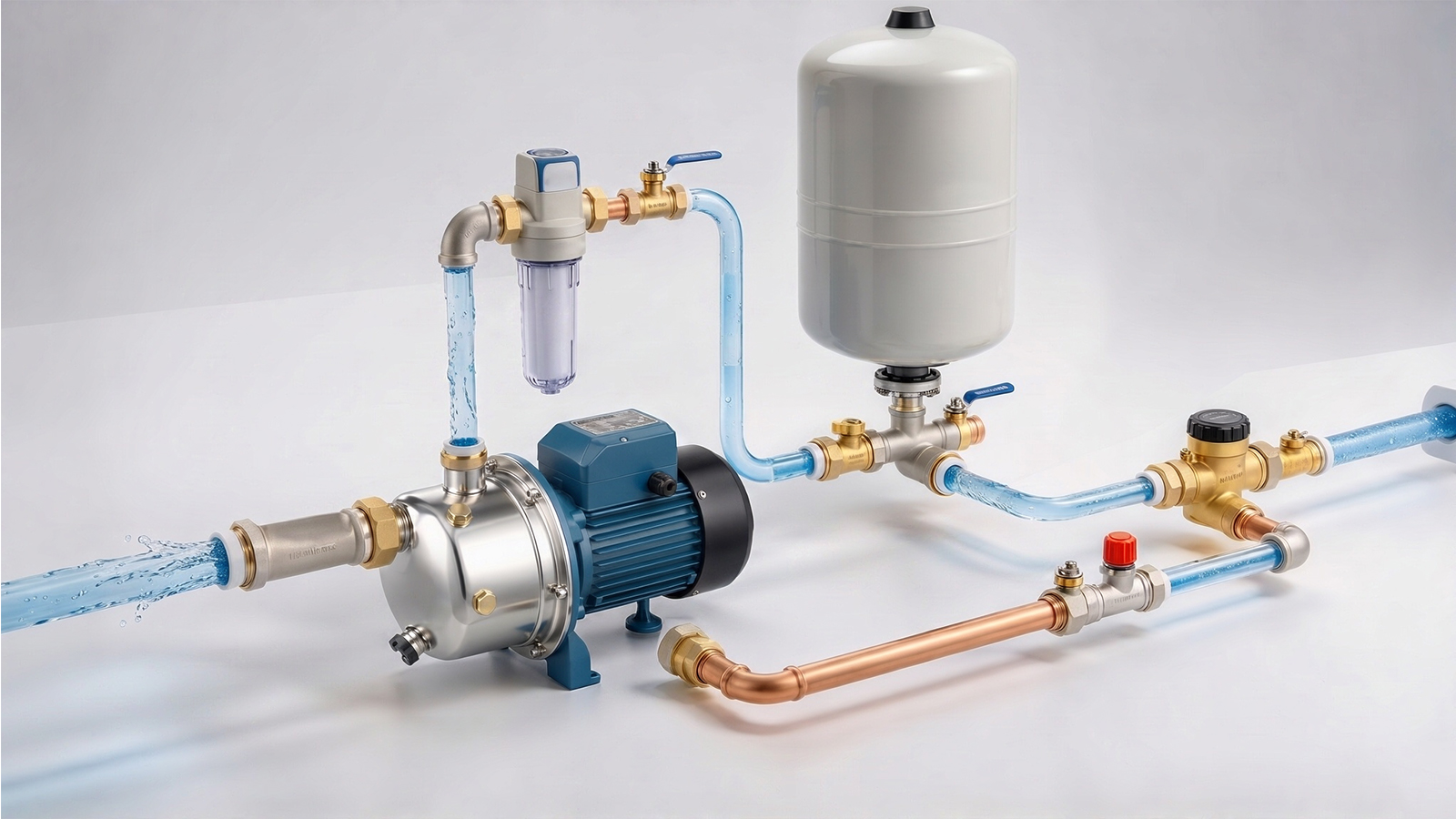
Home Water Pressure Booster: How It Works & When You Need One
It starts the same way in almost every house. You turn on the shower at seven in the morning and get a tired dribble instead of a proper spray. Downstairs someone flushes a toilet and the kitchen tap drops to a trickle. The water is there. What’s missing is the push behind it.
That push is pressure, and fixing it is the entire job of a home water pressure booster. This guide covers what these pumps do, how the internals actually work, which type suits which building, the standards a serious buyer should check, and how to size one without drowning in hydraulics. Real numbers, named sources, and no hand-waving.
What Is a Home Water Pressure Booster?
A home water pressure booster is a pump that raises the pressure of water already moving through a building’s pipes. It doesn’t create water and it doesn’t purify it. It takes water arriving at, say, 25 psi and pushes it out at 45–60 psi so showers, taps and appliances behave the way their designers intended.
Three units come up constantly, so let’s ground them:
- psi (pounds per square inch) — the North American unit. 1 bar ≈ 14.5 psi.
- bar— the metric equivalent used nearly everywhere else. 1 bar ≈ 100 kPa.
- GPM or L/min— flow, meaning how much water comes out. Pressure is the push; flow is the volume. You need both, and confusing them is the most common sizing mistake in the trade.
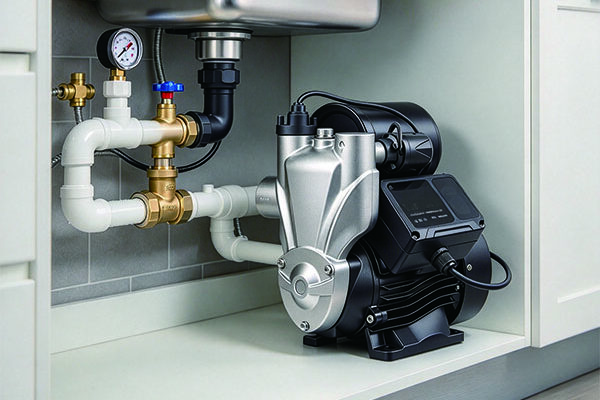
Here’s the distinction that trips up first-time buyers. Static pressure is what you measure with every tap closed. Dynamic (working) pressure is what you get while water is actually moving — and it is always lower. A house can show a perfectly healthy 60 psi on a gauge at the hose bib and still deliver a miserable shower, because the moment two fixtures open, friction and pipe losses eat the difference.
Think of a home water pressure booster as buying back that lost working pressure. The EPA’s own analysis of showerheads makes the point neatly: the average installed showerhead flows at about 2.22 gpm in real homes, below its 2.5 gpm rating, largely because products are rated at 80 psi while most houses run at less (EPA WaterSense supporting statement). Rated pressure and delivered pressure are not the same animal.
It’s also worth separating a booster from its opposite number. A pressure-reducing valve (PRV) lowers pressure that is dangerously high. Under the 2021 International Plumbing Code, where static pressure inside a building exceeds 80 psi (552 kPa), an approved PRV conforming to ASSE 1003 or CSA B356 must be installed to bring it back to 80 psi or below (ICC, IPC 2021 §604.8). A booster does the reverse job. Get the direction wrong on a house that already has high pressure and you will start popping leaks, not fixing showers.
Do You Actually Need One? Read the Symptoms First
Not every weak shower justifies a pump. Before spending money, work out whether the problem is one fixture, one floor, or the whole building.
| Symptom | Most likely cause | What to do first |
| One tap or one shower is weak | Clogged aerator, scale in the showerhead | Unscrew it, soak in vinegar overnight |
| Only hot water is weak | Sediment in the heater, partly closed inlet valve | Flush the tank, check the valve is fully open |
| Upper floors weak, ground floor fine | Gravity — insufficient head | Measure the height; this is a booster job |
| Whole house weak, all day | Low municipal supply or undersized service line | Test static pressure morning and evening |
| Pressure collapses when two fixtures run | Flow capacity too low, not just pressure | Count simultaneous fixtures before sizing |
| Neighbours affected too | Main break, hydrant flushing, peak demand | Call the utility — no pump fixes this |
A genuinely useful field test: take a 9-litre bucket to the tap nearest the water meter, open it fully, and time the fill. Anything longer than about 30 seconds suggests low pressure (City of Gold Coast). That threshold works out to roughly 18 L/min, which is about what two fixtures demand at once — so it’s a sensible benchmark rather than an arbitrary one.
There’s also a regulatory floor worth knowing. Massachusetts plumbing code sets minimum flowing pressures at the fixture: 8 psi for a residential lavatory faucet, kitchen faucet, bathtub and showerhead; 15–20 psi for a flushometer toilet; 10 psi for an outside hose bib. The same code says that where supply pressure can’t deliver those figures, “a booster pump and pressure tank or other means” shall be installed (248 CMR 10.14). In plenty of jurisdictions, then, a home water pressure booster isn’t a luxury upgrade. It’s the code-compliant answer to a measured deficiency.
How a Home Water Pressure Booster Works
Strip away the marketing and a home water pressure booster is a short chain of parts, each doing one job.
- Inlet and strainer.Water arrives from the mains or a break tank. A strainer catches grit that would otherwise score the impeller. On older galvanised systems this is not optional — construction debris and rust flakes are the number one killer of new pumps.
- The pump: an impeller on a motor.Nearly every home water pressure booster sold today is centrifugal. A spinning impeller flings water outward, turning motor speed into pressure. How much pressure depends on impeller diameter, speed, and how many impellers sit in series.
- Pressure sensing.A pressure switch on fixed-speed pumps, or a transducer on variable-speed units. A switch is a blunt two-point device: start at the cut-in pressure, stop at the cut-out. A transducer feeds continuous readings to an inverter.
- The pressure tank.On fixed-speed units, a bladder tank stores pressurised water so the pump doesn’t restart every time someone washes their hands. This is why tank-less boosters with no buffer tend to short-cycle themselves to death — the pump starts and stops dozens of times an hour, and the motor and switch wear out long before the impeller does.
- Control logic.A variable-speed drive trims motor speed to hold the setpoint instead of switching on and off. Steady pressure, no water hammer, less power, and far fewer starts.
- Non-return valve and dry-run protection.The check valve stops backflow spinning the impeller backwards. Dry-run protection shuts the pump down when the supply fails — the single most common cause of premature failure we see in the field, and the feature most often bypassed by installers who find it “nuisance tripping.”
The cycle in plain language: you open a tap, pressure drops, the sensor notices, the motor spins up, pressure recovers, and the pump either holds speed or shuts off. Everything else — soft start, anti-cycling logic, thermal cutout, automatic restart — is refinement on that loop.
One physical fact governs every installation: gravity costs about 1 bar for every 10 metres of vertical lift (roughly 43 psi per 100 ft). A pump feeding a third-floor bathroom pays that bill before it delivers a single litre at the tap. In most houses, height matters more than horizontal distance.
What a Home Water Pressure Booster Actually Does
A correctly sized unit changes five things beyond “the shower is better”:
- Simultaneous use stops being a negotiation.Two bathrooms can run at once without the pressure collapsing.
- Appliances behave.Washing machines and dishwashers have inlet pressure windows; below them, cycles stretch, fill valves chatter, or the machine throws an error.
- Temperature stops swinging.Mixing valves and tankless heaters respond badly to pressure swings. The classic cold-sandwich shower is usually a pressure problem wearing a temperature costume.
- Fill times drop.Toilets and cisterns refill faster, which stops being trivial the moment you’re running a guesthouse.
- Outdoor work becomes practical.A hose that reaches the far end of the garden, or a pool filter that backwashes properly, changes what you can maintain.
What a home water pressure booster cannot do is fix a clogged pipe, a half-closed stop valve, an undersized service line from the street, or a municipal main break. It amplifies what you have. If what you have is throttled by a restriction, the pump just pushes harder against the same restriction and you get noise, heat and disappointment.
Types of Home Water Pressure Boosters

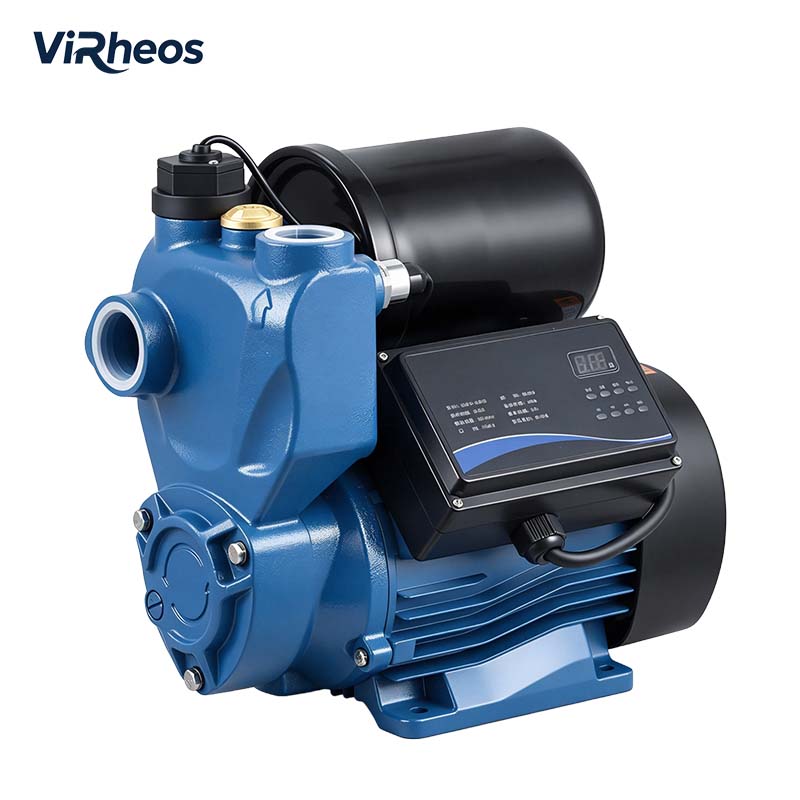
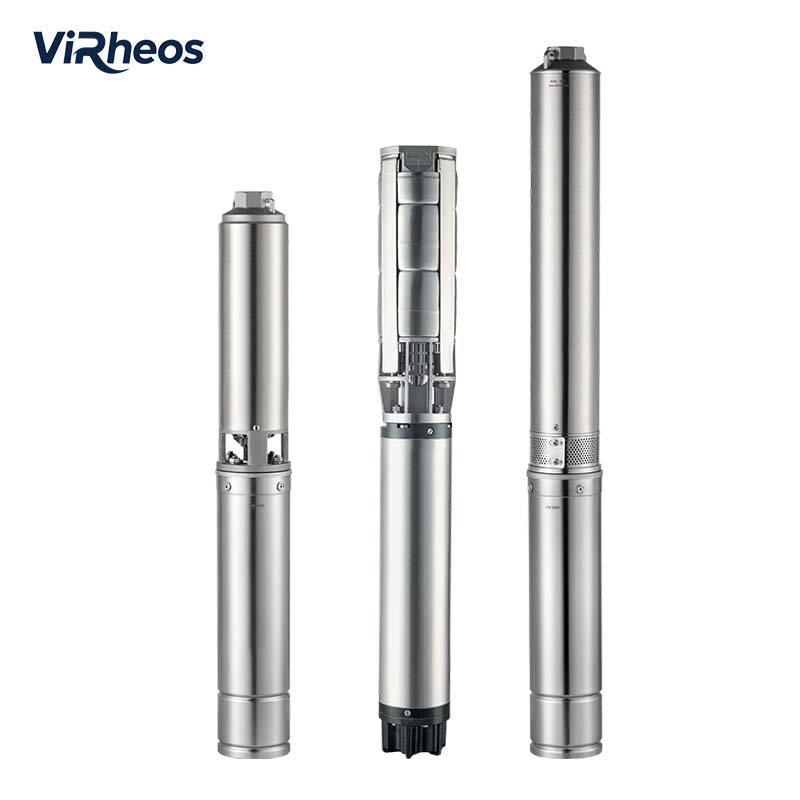
| Type | Typical head | Typical flow | Best for | Noise profile | Relative cost |
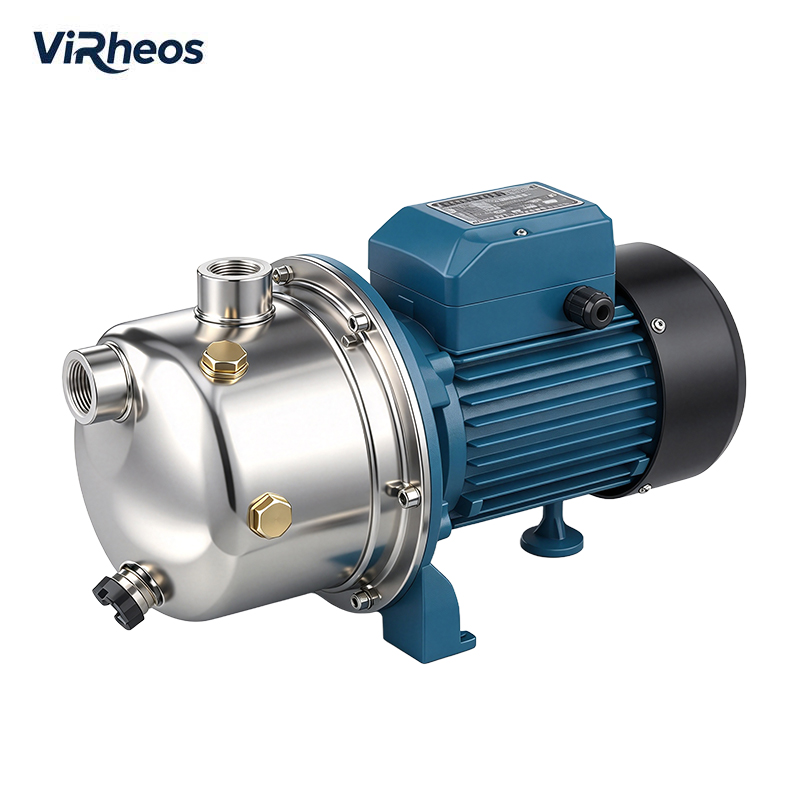
| Single-stage centrifugal | 15–40 m | 3–30 m³/h | One- to two-storey homes, short runs | Moderate, 50–65 dB | Lowest |
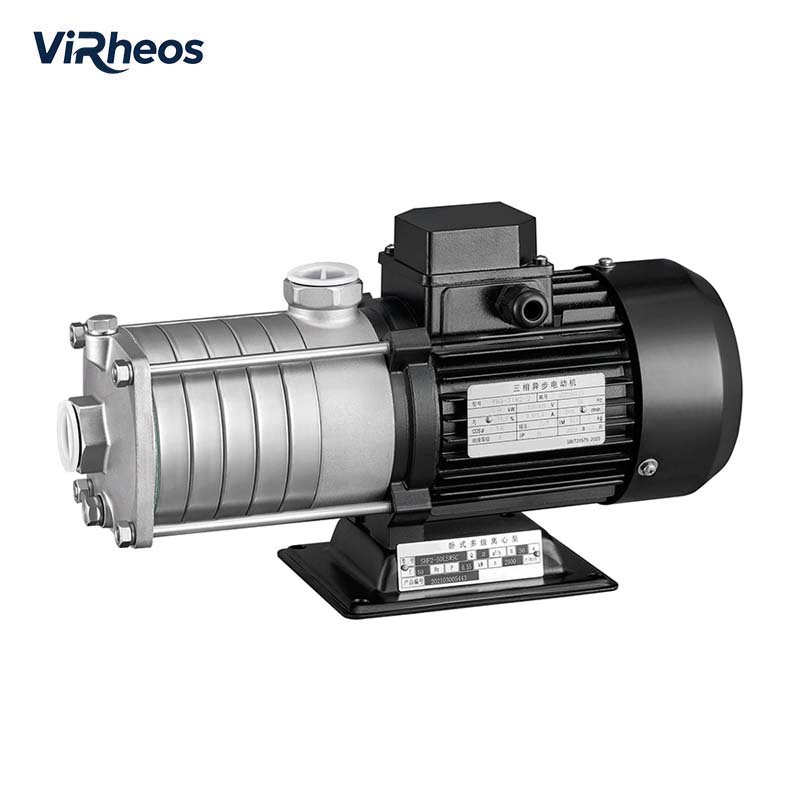
| Multistage centrifugal | 30–80 m+ | 1.5–10 m³/h | Multi-storey, long narrow risers, high boost | Moderate but smoother | Medium |
| Self-priming / jet (surface) | 20–45 m | 2–15 m³/h | Shallow wells, suction from low tanks | Higher | Low–medium |
| Integrated variable-speed unit | up to ~45 m | up to ~5 m³/h | Whole-house boosting, quiet retrofits | Low, 44–55 dB | Medium–high |
| Submersible well pump | 30–100 m+ | 1–10 m³/h | Deep wells, source-side lift | Inaudible at surface | Medium–high |
For a typical family house on municipal supply, the home water pressure booster decision usually comes down to a contest between a single-stage fixed-speed pump with a pressure tank and an integrated variable-speed unit. The first is cheaper and dead simple to service. The second is quieter, holds pressure rock steady, and uses less power over a year — which is exactly where the market has been moving.
Market researchers estimate single-stage configurations still hold most unit sales (around 58% share) on purchase price and simple maintenance, while multistage units grow faster as high-rise and light-commercial demand rises (Dataintelo, 2025). Treat those figures as directional rather than gospel: commercial market reports routinely differ by 10–20% depending on how they define a booster pump and which end-uses they count.
Where Home Water Pressure Boosters Get Used
| Application | What breaks without one | Recommended configuration | Spec priorities |
| Single-family home, 1–2 storeys | Weak showers, slow cistern fill | Single-stage fixed-speed + pressure tank | Price, simple wiring, dry-run protection |
| Townhouse, 3–4 storeys | Upper floors starve at peak | Multistage or integrated variable-speed | Head margin, quiet operation |
| Apartment block / small hotel | Complaints at the morning peak | Booster set with duty/standby pumps | Redundancy, service access, VFD |
| Rainwater or tank-fed supply | Gravity head near zero | Self-priming unit with foot valve | Suction lift, priming reliability |
| Well water | Pressure swings, pump cycling | Submersible or jet + tank, 30/50 or 40/60 switch | Cut-in settings, tank pre-charge |
| Garden irrigation, pool filter | Sprinklers don’t reach, weak backwash | Single-stage, outdoor-rated (IPX4+) | Duty cycle, weatherproofing |
| RO and point-of-use filtration | Membrane performance collapses at low pressure | Compact dedicated booster | Stable low-flow pressure, certified wetted parts |
That last row is routinely overlooked. Point-of-use treatment equipment has its own pressure requirements, and a whole-house booster upstream often “repairs” a filter that was never actually faulty.
Matching the home water pressure booster to the building matters more than matching it to a brand. An undersized home water pressure booster on a four-storey townhouse will run continuously and fail early. An oversized unit on a small flat will short-cycle, hammer the pipework, and annoy everyone within earshot.
Standards and Certifications That Actually Matter
If you’re buying for resale or specifying into projects, this is the section that protects you. A pump can perform beautifully on a test bench and still be unsellable in a regulated market.
| Standard / certification | What it governs | Why it bites |
| IPC 2021 §604.8(US) | Static pressure over 80 psi requires a PRV to 80 psi or less | Baseline rule in North American residential codes; PRV to ASSE 1003 or CSA B356 |
| 248 CMR 10.14 (Massachusetts) | Minimum flowing pressure at fixtures (8–20 psi); mandates booster plus tank where supply is inadequate | Useful template even outside Massachusetts |
| 10 CFR 430.32(p) (US) | Showerheads limited to 2.5 gpm, tested at 80 psi flowing | Explains why fixture flow claims assume a pressure most homes don’t have |
| EN 806-5:2012 (EU) | Operation and maintenance of potable water installations, pressure booster pumps included | Requires flushing per EN 806-4 at commissioning; covers inspection intervals and noise |
| NSF/ANSI/CAN 61 (US) | Health effects of materials contacting drinking water | Most US state drinking-water regulations require third-party certification |
| NSF/ANSI 372 (US) | Lead content — weighted average not over 0.25% | Applies under SDWA §1417 since January 2014 |
| WRAS / BS 6920 (UK) | Non-metallic materials in contact with wholesome water | Effectively mandatory for UK potable fittings |
| ISO 9906:2012 | Hydraulic performance acceptance tests for centrifugal pumps | Grade 2B is the usual industrial reference (~−5% efficiency tolerance); Grade 3B allows ~−7% |
| IEC 60034-30-1 / EU 2019/1781 | Motor efficiency classes IE1–IE5 | IE3 mandatory 0.75–1000 kW since July 2021; IE4 for 75–200 kW since July 2023 — single-phase motors are outside scope |
| ErP, EU Reg. 641/2009 | Energy Efficiency Index for circulators | EEI ≤0.27 from 2013; ≤0.23 from August 2015 |
One trap worth flagging: efficiency claims are easy to inflate. The ISO 9906 acceptance grade matters, because the same pump tested at Grade 3B can advertise a better efficiency figure than at Grade 2B purely thanks to the wider tolerance band. Comparing two suppliers’ curves without checking the grade is meaningless (Xylem/Lowara technical paper).
Hygiene is the other under-rated area. Any home water pressure booster sits inside a drinking-water system, and that carries obligations: flushing to EN 806-4 before commissioning, drinking-water-suitable materials throughout, and design that avoids stagnation and dead legs. KSB’s guidance on pressure booster systems is blunt about it — a unit parked in a warm plant room with stagnant branches upstream is a water-quality liability, not just a mechanical one (KSB).
The Three Complaints Every Buyer Has: Energy, Noise and Price
Energy
Pumps are not small loads. Work by the US Department of Energy found pumping systems account for nearly 20% of global electrical energy demand and 25–50% of energy use in some industrial facilities, with better system design typically saving 20% or more. In Europe, Europump calculated electric pumps consume over 300 TWh a year, and that water pumps alone could shed 35 TWh — the output of roughly four coal-fired plants — simply by matching capacity to demand with a variable-speed drive instead of throttling a fixed-speed motor .
Why variable speed wins is almost embarrassingly simple. A fixed-speed motor spinning at full tilt all day is paying for capacity nobody uses at 3 a.m. Published savings for variable-speed control over fixed-speed operation typically land between 30% and 50% where demand swings hard.
But let’s be honest about the domestic arithmetic, because the brochures rarely are. A 750 W home water pressure booster running two hours a day consumes about 550 kWh a year. Cut that by 35% and you’ve saved roughly 190 kWh — call it $30 a year at $0.16/kWh. That will not pay back a large price premium on its own. Where the energy case becomes decisive is long hours and larger machines: a 1.1 kW unit serving a twelve-room guesthouse for eight hours a day burns about 3,200 kWh a year, and a third of that is real money, plus the avoided callouts when an over-cycled pump dies in high season.
There’s a second energy angle nobody mentions. Water heating is about 18% of home energy use and usually the second largest household energy expense . If weak pressure is stretching shower times, restoring pressure shortens them. The EPA’s showerhead work assumed an average shower of 8.2 minutes and 17.2 gallons, with about 73% of that water heated. Two minutes saved per shower, per person, per day is both water and heating — every day, for years.
Noise
This is the complaint that gets home water pressure boosters ripped out. For context, the World Health Organization recommends under 30 dB(A) in bedrooms at night for good sleep quality and under 40 dB(A) as an annual average outside bedrooms.
| Sound source | Typical level | Comment |
| Library | ~34 dB(A) | Reference quiet |
| Premium integrated booster (e.g. Grundfos SCALA2) | <47 dB(A) | Manufacturer data; newer generation listed at 44 dB(A) |
| Dishwasher, typical use | 46–60 dB | Grundfos comparison figure |
| Conventional fixed-speed booster, fan-cooled motor | 55–72 dB | Where complaints usually start |
| Normal conversation | ~60 dB | — |
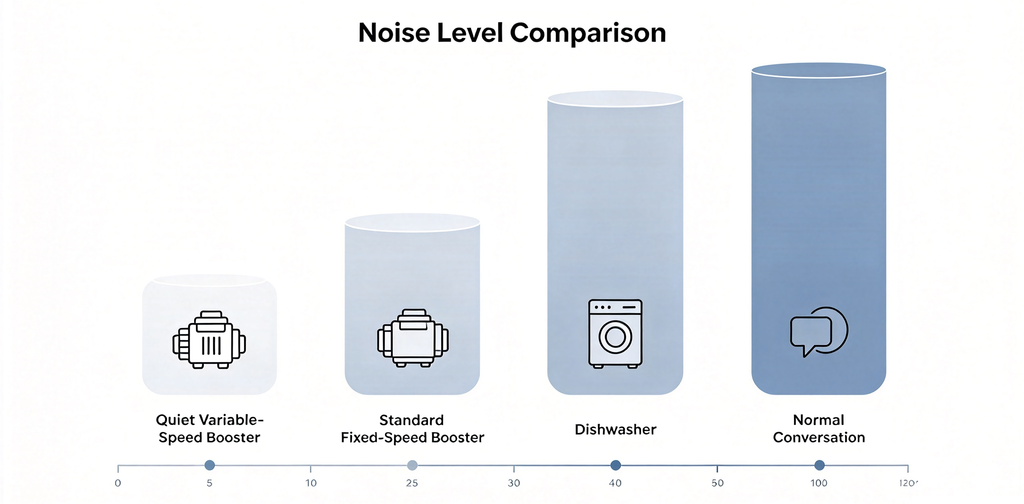
A 6 dB(A) reduction is perceived as roughly halving the loudness, which is why the gap between a 70 dB unit and a 47 dB unit feels enormous. Much of that gap comes down to cooling: a quiet home water pressure booster is almost always a water-cooled design, because fan-cooled motors add both a fan and vibration, while water-cooled integrated designs lose both.
If a home water pressure booster sits anywhere near a bedroom, pay for the quiet model. And note that installation is half the battle — mount on a solid surface, use rubber isolation pads and flexible connectors, and never let the unit hang off the pipework. Unsupported pipe turns into a sounding board and adds several decibels at the far end of the run.
Price
Purchase price is the smallest line on the receipt. Europump’s own assessment was that adding a frequency converter usually lowers total cost across the pump’s life, with payback typically two to four years — and noted that industrial buyers often reject anything slower than two. For a domestic booster running several hours a day, the payback on the variable-speed premium is usually at the longer end of that range on electricity alone, and much shorter once you price in a replacement pump and a plumber’s visit.
So the honest framing for a home water pressure booster is this:
- Low hours, one boosted fixture, tight budget? A fixed-speed single-stage pump with a pressure tank is genuinely the right buy. Don’t let anyone shame you out of it.
- Whole house, daily multi-hour use, bedrooms nearby? The variable-speed premium is recovered in electricity, in silence, and in not replacing a pump that short-cycled itself to death.
Buying a Home Water Pressure Booster Without a Hydraulics Degree
You don’t need the Darcy-Weisbach equation. Before you buy a home water pressure booster you need five numbers and one honest conversation about how the household behaves.
- Measure static pressure.Screw a cheap gauge onto an outdoor hose bib, close every fixture in the house, and read it. Do it morning and evening, because municipal pressure swings. Write down the lower figure.
- Measure flow the crude way.The 9-litre bucket test gives you a usable number: litres ÷ seconds × 60 = L/min. If you fill 9 litres well inside 30 seconds, your supply flow is probably fine and your problem is height or friction rather than the mains.
- Count simultaneous fixtures.Be realistic. Morning peak in a family home is usually two showers, or a shower plus a washing machine fill. A shower is roughly 8–10 L/min; a cistern fill around 5–6 L/min. Add the two worst cases together — that’s your target flow.
- Work out the lift.Height from pump to highest outlet, at about 1 bar per 10 m (roughly 43 psi per 100 ft). A three-storey house with the pump in the basement easily carries 8–10 m of static lift before any pipe friction enters the picture.
- Set the target pressure.Aim to land fixtures in the 40–60 psi band. Above 80 psi static you’re into PRV territory under IPC 604.8. On a well system, standard residential switch settings are 30/50 or 40/60 psi, and the tank’s air pre-charge should sit about 2 psi below the cut-in pressure — a detail routinely skipped, and the usual explanation for short cycling after a switch change.
- Check the paperwork.Wetted materials certified to NSF/ANSI 61 (US) or WRAS/BS 6920 (UK); motor efficiency class stated per IEC 60034-30-1; performance curves naming the ISO 9906 grade; dry-run and thermal protection; an IP rating suited to the location; and hygiene documentation referencing EN 806-4.
- Ask about the boring things.Spare impellers and seals held in country, warranty terms in writing, and whether the supplier can build a duty/standby set if the building can’t tolerate downtime.
A worked example. Two-storey house, municipal static pressure measured at 28 psi, pump to sit in the garage, highest outlet a shower 6 m up. Morning peak is two showers at 9 L/min each, so target flow ≈ 18 L/min. Required boost: 6 m of lift ≈ 0.6 bar, plus friction through 20 m of pipe and fittings (call it 0.4 bar), plus about 2.5 bar at the outlet — roughly 3.5 bar total, or about 35 m head at 18 L/min. You’d be specifying a multistage unit or an integrated variable-speed booster rated around 18–20 L/min at 35 m head, with the duty point sitting near the middle of the curve rather than at either extreme. Every number there is arithmetic you can redo with a tape measure and a gauge.
Installation and Everyday Use
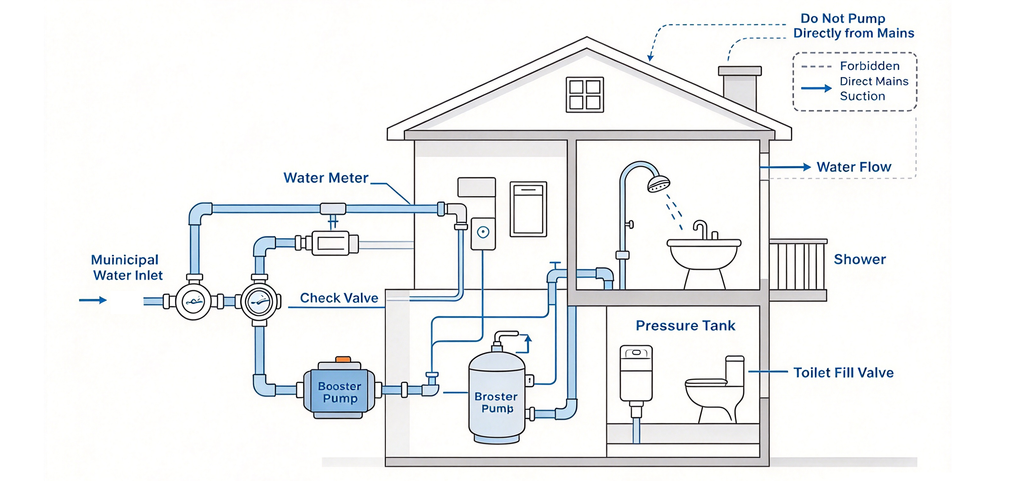
Placement. Install a home water pressure booster on the incoming main, downstream of the meter and any backflow device — or on a break tank where the utility prohibits boosting directly from the mains. Many utilities do prohibit it, precisely so a pump can’t pull negative pressure on the public network. Check before you specify, not after.
Commissioning. Fill and vent before the first start; a pump run dry for even a minute can destroy a mechanical seal. Flush the pipework before connecting the unit on a new installation. Set the switch or controller setpoint, then verify with a gauge at the furthest fixture, not at the pump discharge.
Routine checks, roughly quarterly:
- Listen for start-stop cycling every few seconds. That means a waterlogged or undersized pressure tank, or a differential set too narrow.
- Clean the inlet strainer.
- Confirm the dry-run protection actually trips.
- Look for weeps at unions and at the check valve.
- Re-read static pressure. A sudden change usually signals a supply-side event, not a pump fault.
Winter. If the location can freeze, drain your home water pressure booster or lag it. EN 806-5 is explicit that installations in frost-risk areas without protection should be drained in time to prevent damage.
And don’t do this. Never dead-head a booster against a closed valve for long periods. Never bypass dry-run protection because it keeps tripping — find out why it’s tripping. Never size on pressure alone and ignore flow.
Three Field Scenarios
- Scenario A — the 1990s townhouse. Municipal pressure 30 psi, three storeys, home water pressure booster in the under-stairs cupboard, top-floor shower unusable at peak. Fix: integrated variable-speed booster set to about 2.8 bar, mounted on a rubber pad against a masonry wall, with flexible connectors on both ports. Expected outcome: stable pressure on every floor and a unit quiet enough that the adjacent bedroom doesn’t register it.
- Scenario B — the tank-fed villa. Rainwater tank at ground level, gravity head under 0.3 bar, whole house starved. Fix: self-priming jet booster with a foot valve and a short, airtight suction line. The detail that decides success here is suction integrity — an undersized inlet or a weeping joint shows up as noise, heat and falling pressure, and gets misdiagnosed as a weak pump.
- Scenario C — the small guesthouse. Twelve rooms, demand concentrated into a 90-minute morning peak, complaints about pressure and noise. Fix: a twin-pump booster set with duty/standby rotation on a VFD. Redundancy matters more than raw pressure here — when one home water pressure booster needs service, the building keeps running. It’s also the case where the energy argument is strongest, because demand swings enormously across the day: exactly the hotel pattern Europump describes, where a fixed-speed pump draws at noon what it only needs at 7 a.m.
These are sizing archetypes rather than one specific customer’s installation, and the numbers should be re-measured on site. What transfers between them is the sequence: measure, count fixtures, work out lift, then choose.
FAQ
How many psi should a home have?
- Roughly 40–80 psi, with about 60 psi a common target. Codes cap static pressure at 80 psi (IPC 2021 §604.8) and require a PRV above that. EPA WaterSense points to a 60 psi maximum, with fixtures performing best between 45 and 60 psi.
Will a home water pressure booster increase my water bill?
- Better flow means fixtures deliver more water per minute, so consumption can rise if habits don’t change. The pump itself doesn’t waste water. For perspective, EPA estimates average household leaks waste nearly 10,000 gallons a year and can add up to 10% to a water bill — so fixing leaks usually pays faster than optimising the pump .
Can I boost pressure straight off the mains?
- Sometimes. Many utilities require a break tank to stop the pump drawing negative pressure on the public network. Check the local rule first.
How loud is too loud?
- Near a bedroom, anything above about 55 dB tends to generate complaints. WHO guidance points to under 30 dB(A) in bedrooms overnight; a premium integrated booster at 44–47 dB(A) is a different world from a 70 dB fan-cooled unit.
How long does one last?
- A home water pressure booster’s service life tracks cycling frequency, dry-run events and water quality far more than the brand on the nameplate. Pumps that short-cycle or run dry fail in a couple of years. A correctly sized unit with a working pressure tank and intact dry-run protection commonly runs much longer.
Do I need a pressure tank with a variable-speed unit?
- Integrated variable-speed boosters carry a small built-in diaphragm tank. It’s small because the inverter handles demand changes rather than stored water. A large external tank is mainly a fixed-speed requirement.
Bottom Line
A home water pressure booster is straightforward engineering whose results depend almost entirely on how honestly it was sized. Measure the supply instead of guessing. Count the fixtures that genuinely run together. Respect the lift. Then spend the budget on what determines whether you’re still happy in three years: quiet operation, proper pressure tank or inverter control, certified wetted materials, and dry-run protection nobody is tempted to bypass.