
What Is an Irrigation System Pump? Types, Parameters & Real-World Applications
The short version: an irrigation system pump is the machine that turns a water source — a well, a canal, a pond, a reservoir, a municipal line — into water arriving at the crop at the right rate and the right pressure. Flow decides how many hectares you can cover in a day. Pressure decides whether a sprinkler throws a proper pattern or just dribbles, and whether a dripper at the far end of the block delivers anything at all.
That is the whole job. The confusion starts because “irrigation pump” covers everything from a 0.75 kW garden unit to a 300 kW vertical turbine hanging 200 metres down a borehole. Same name, completely different machines.
1. What Is an Irrigation System Pump?
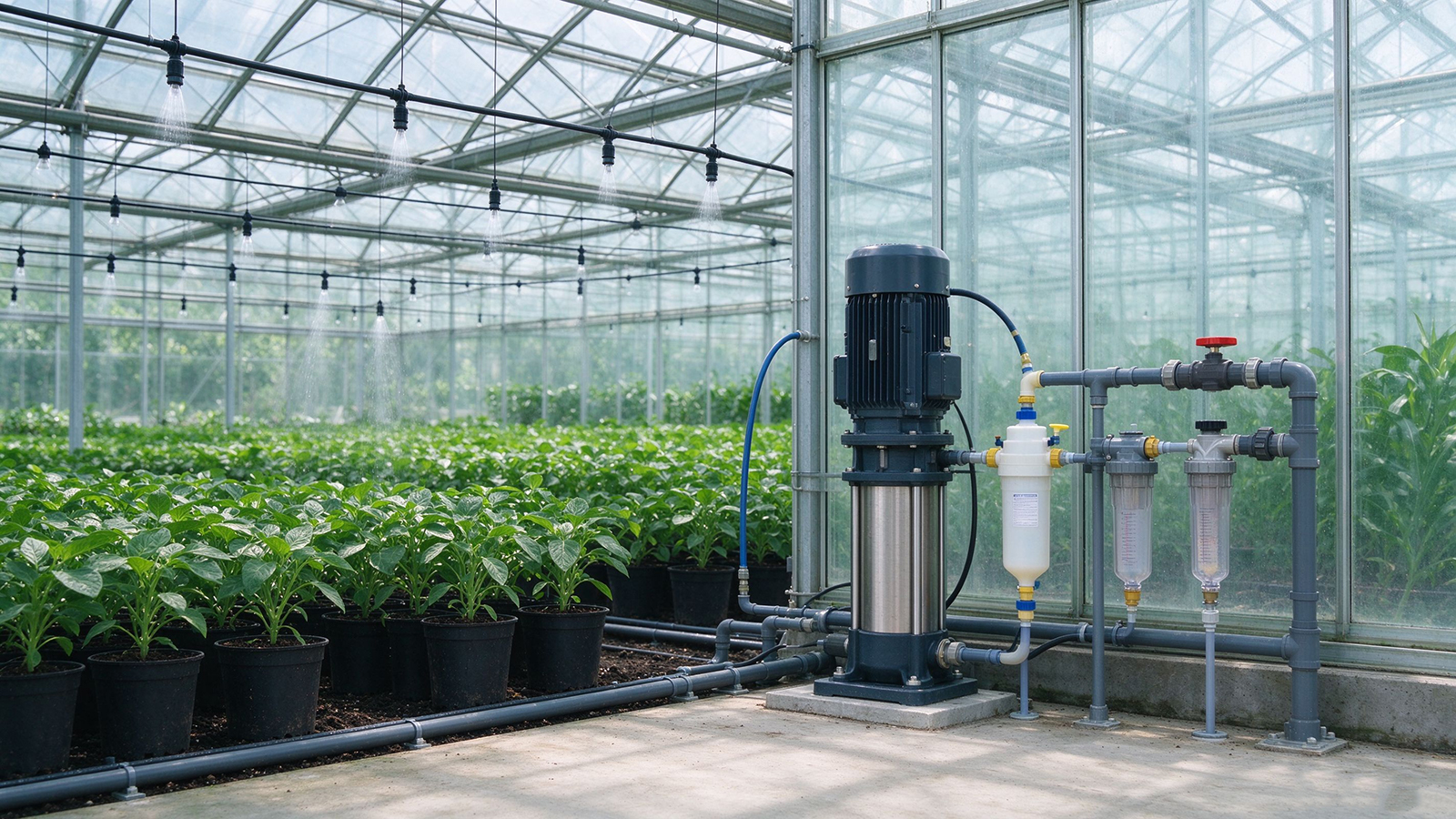
An irrigation system pump is a pump plus whatever it needs to run: driver, base, suction arrangement, filtration, controls and protection. In almost all cases the pump itself is a centrifugal machine — an impeller spinning inside a casing, flinging water outward and turning shaft power into pressure and flow.
Two things separate it from a general-purpose water pump. First, it is sized against a system curve, not against a single number: as the network gets longer and the emitters multiply, the pressure needed to push a given flow climbs. Second — and this is the part most buyers miss — an irrigation system pump is usually asked to run very long hours in a narrow band of duty. A pump that spends 1,500 hours a year near one point on its curve is a very different machine from one that starts and stops all day.
Scale matters here. In the United States the 2023 Irrigation and Water Management Survey counted 212,714 farms irrigating 53.1 million acres, applying 81 million acre-feet of water. Groundwater from on-farm wells supplied 54% of the water applied to open-field acres, and the average well was 241 feet deep. That single statistic — 241 feet — is why deep-well machines dominate the North American market and why a shallow-well centrifugal simply cannot be dropped into most of those sites. Ask for an irrigation system pump quote without giving that depth and you will be sold the wrong machine.
Zoom out and the pressure on this equipment only grows: globally, agriculture accounted for 72% of all freshwater withdrawals in 2020.
2. How an Irrigation System Pump Works
An irrigation system pump does exactly two things with the energy you feed it: it moves a volume of water, and it raises that water’s pressure. Everything else is detail.
Three ideas explain everything you need.
Flow is volume per time — litres per second, cubic metres per hour, gallons per minute. It is set by how many emitters, sprinklers or pivots are open at once, plus any leaching or frost-protection demand.
Head is pressure, expressed as height. Metres of water column, or feet. Every metre the water must be lifted, every metre lost to friction, and every bar the emitters need at their inlet adds to it. Handy conversions: 1 bar ≈ 10.2 m of water column; psi × 2.31 = feet of head.
Total dynamic head (TDH) is the sum of all of it. Static lift from the water surface to the discharge point, plus the drop in the well when the pump runs (drawdown), plus pipe friction, plus the pressure the emitters need, plus filter and valve losses. Add 10–15% and you have the number to give a supplier.
Those two numbers — flow and head — are the whole specification for an irrigation system pump.
Then the pump curve does the rest. Every centrifugal pump has a curve showing what head it makes at each flow. Where that curve crosses your system curve is the duty point — the only point that actually exists in the field. Buy the pump for the duty point, not for the peak flow on the box.
One more thing worth knowing: pumps have a best efficiency point (BEP), and running far to the left or right of it costs money and shortens life. Roughly 70–120% of BEP flow is the accepted comfortable band.
3. What an Irrigation System Pump Actually Does
Beyond moving water, a well-specified irrigation system pump delivers five things:
- Pressurises the networkso every emitter, from the nearest to the farthest, works. Distribution uniformity depends on it.
- Holds a stable duty pointwhile zones open and close, filters load up, and the water table drops through the season.
- Feeds filtration and dosing equipment— sand separators, screen or disc filters, fertiliser injectors — each of which eats pressure.
- Runs on someone else’s schedule.Timers, soil-moisture probes, or a VFD following pressure. It has to start and stop reliably, unattended, hundreds of times a season.
- Survives its own environment.Dust, 40°C afternoons, voltage that dips at dusk, a well that silts up over the years.
4. Types of Irrigation System Pump
Pump type follows the water source. Six configurations cover almost every duty an irrigation system pump is asked to do.


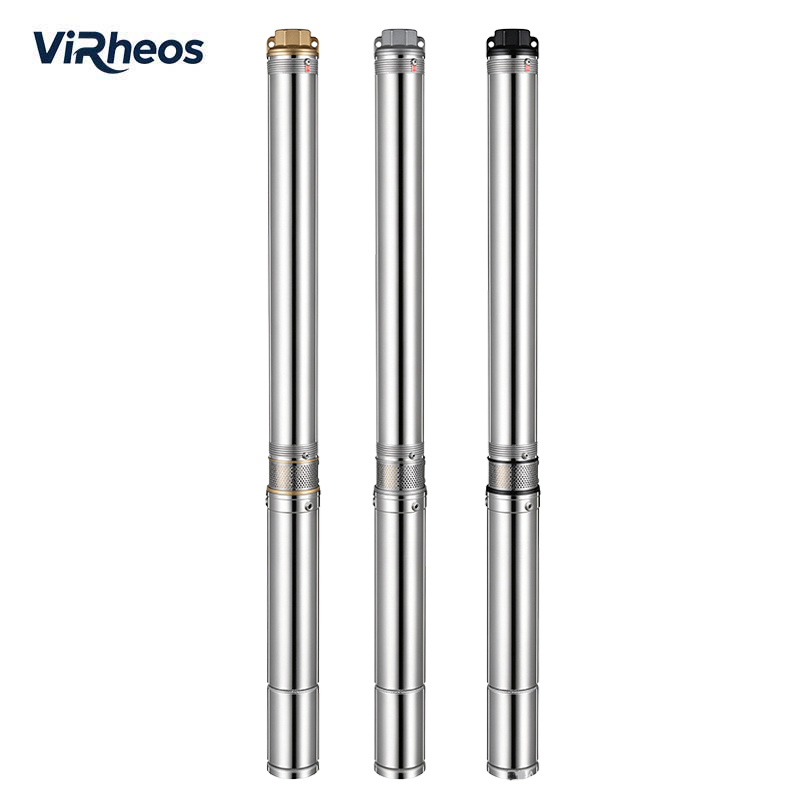
| Type | How it is built | Best for | Watch out for |
| End-suction centrifugal | Single impeller, horizontal, close-coupled or on a base | Surface water: ponds, canals, open reservoirs; suction lift up to about 7–8 m | Priming every start; suction pipe must be airtight and short |
| Self-priming centrifugal | End-suction with a priming chamber | Sites where the water level moves, or the pump is above the source | Slightly lower efficiency than a standard end-suction; check the priming chamber is filled |
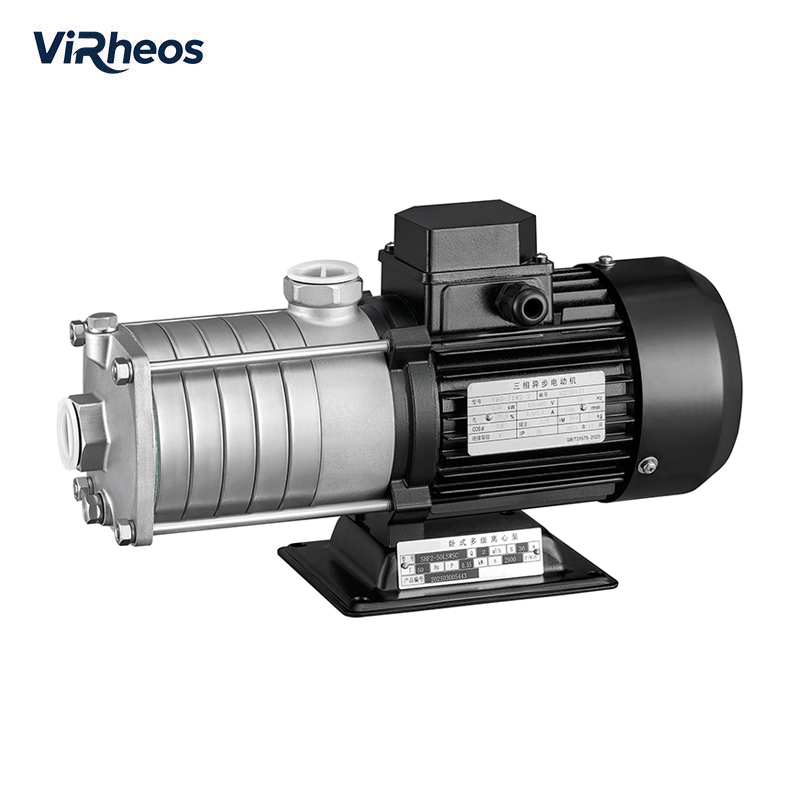
| Horizontal multistage | Several impellers in series on one shaft | Long laterals, high pressure from a small footprint, booster duty | Clean water only; axial balance at high head |
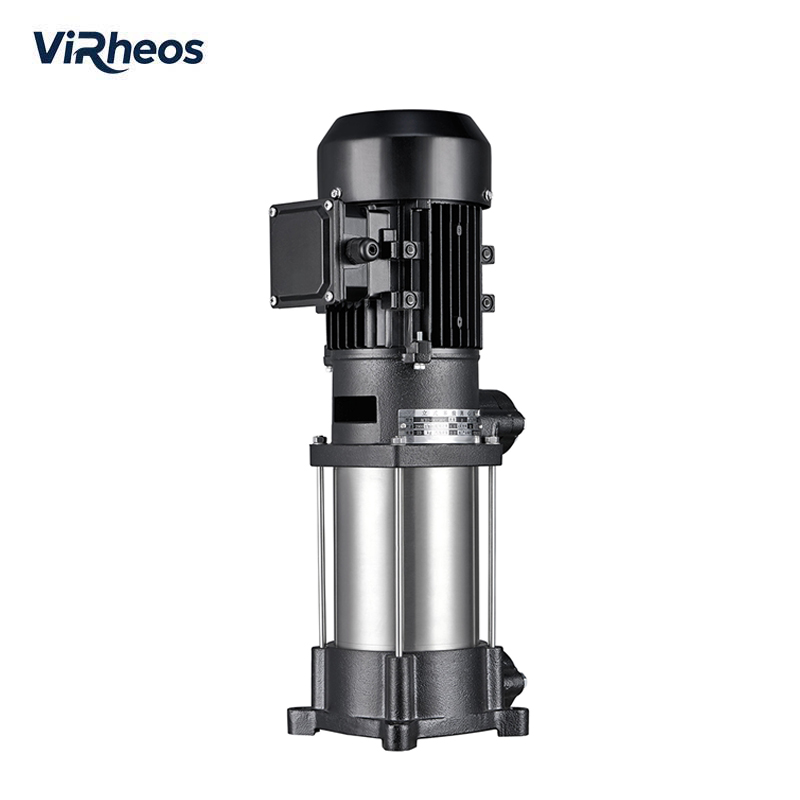
| Vertical multistage (inline) | Stacked stages in a compact vertical body | Fertigation units, greenhouse blocks, pressure boosting in tight plant rooms | Not for sandy water; filtration upstream is mandatory |
| Submersible borehole | Multi-stage pump coupled to a sealed motor, both down the well | Deep wells — the dominant choice where lift exceeds suction limits | Cable and motor cooling; pull it before sand buries it |
| Vertical turbine (long-shaft) | Bowl assembly in the water, motor and discharge head at the surface | Large wells, canals, high-flow irrigation districts | Shaft alignment and lubrication; needs a straight well |
5. Where Each Irrigation System Pump Is Used
The irrigation method dictates the machine, because each method needs a different pressure at the emitters and tolerates a different amount of grit.

Two datasets explain why this table matters commercially.
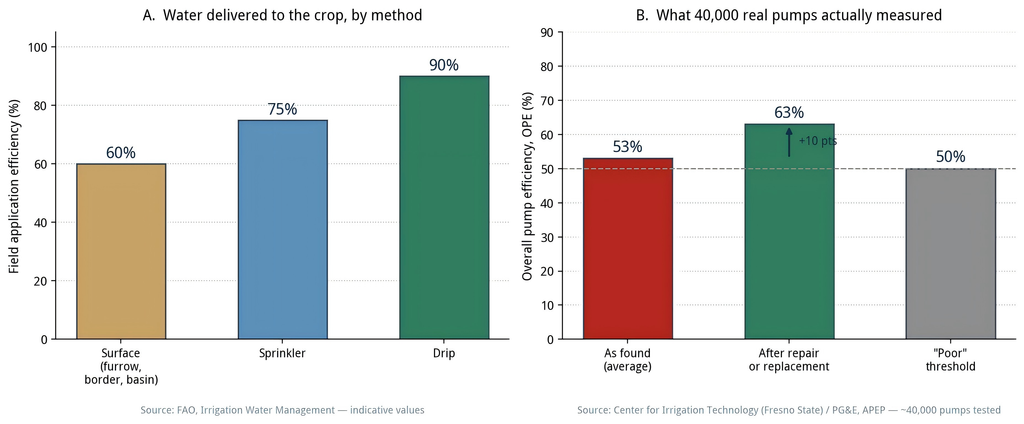
First, method efficiency varies enormously. FAO’s indicative field application efficiencies are around 60% for surface irrigation, 75% for sprinkler and 90% for drip. Move a block from furrow to drip and the water saved is roughly the difference — but only if the pump delivers clean water at 1–2 bar steadily, which furrow pumps never had to do.
Second, the pump itself is often the weak link. California’s Advanced Pump Efficiency Program, run by the Center for Irrigation Technology at Fresno State with PG&E funding, has tested roughly 40,000 pumps over about 15 years. The average overall pump efficiency was about 53%. After repair or replacement, the average rose to 63%. Below 50% is considered poor, and very few tested pumps exceeded 70%. About one-third of California’s irrigation pumps run below 50% efficiency, and lifting a typical well from 50% to 60% cut energy cost by around 17% — roughly $13,000 a year.
That is not a rounding error. Energy is the largest controllable cost most growers have never measured.
6. Industry Standards That Apply to an Irrigation System Pump
Most standards touching an irrigation system pump are about two things: how the performance is tested, and how the pump is built.
- ISO 9906 / ANSI/HI 14.6 — hydraulic performance acceptance tests.These define how a pump is tested and how far the result may deviate from the guaranteed curve. Grades run 1 (tightest), 2, 3 (loosest), with sub-grades 1U, 1E, 1B, 2B, 2U, 3B. Here is the detail buyers rarely hear: the default acceptance grade listed for dewatering, drainage and irrigation is 3B for pumps rated 10–100 kW and 2B above 100 kW . In other words, if you do not specify a grade, you get the widest tolerance band on the sheet. If energy cost matters to you, specify 2B or 1B in the purchase order — it costs a little more and protects a lot.
- ISO 2858 / ISO 5199, or ASME B73.1— dimensional and design standards for end-suction pumps. Useful when you want interchangeability between suppliers.
- ANSI/HI 9.6.3— guidance on the preferred operating region, which is where the 70–120% of BEP band comes from.
- NSF/ANSI 61— required where the pump also supplies drinking water, common on mixed farm-and-household sites.
- ISO 9905 / API 610— only relevant if you stray into heavy industrial duty. Irrigation rarely does.
- EN 12845 and local potable-water approvals— regional equivalents and national marks.
7. Buying Guide: Get These Seven Numbers Right Before You Buy an Irrigation System Pump
| Parameter | What it means | How you get it | Typical mistake |
| Flow | Volume per hour at peak simultaneous demand | Count emitters × their flow, or sprinklers × nozzle flow | Adding up every zone as if all run at once |
| Static lift | Height from water surface to the highest discharge | Survey, or well log plus field elevation | Using the standing level and ignoring drawdown |
| Drawdown | How far the water drops when pumping | Pump test, or a stepped drawdown test | Guessing; it grows as the aquifer declines |
| Friction loss | Pipe, fittings, filters, valves | Pipe length, diameter, material, plus filter ΔP | Forgetting the filter and the fertiliser injector |
| Emitter pressure | Pressure required at the farthest emitter | Emitter datasheet | Sizing to the nearest emitter |
| TDH + margin | Sum of the above | Add them, add 10–15% | No margin, then nothing works in year three |
| NPSHa vs NPSHr | Suction-side margin against cavitation | Atmospheric pressure minus vapour pressure, lift and suction losses | Ignoring it entirely on warm water |
Then work through the order properly:
- Fix the duty point before you look at any catalogue.The irrigation system pump you need follows from it — not the other way round.
- Choose the type from the water source, not from habit.Deep well means submersible or vertical turbine. Pond at 4 m means end-suction or self-priming.
- Specify the test acceptance grade.Ask for ISO 9906 or ANSI/HI 14.6 Grade 2B minimum, and write it on the purchase order.
- Match materials to the water.Cast iron for clean surface water; 304 stainless for fertigation and mildly aggressive water; 316L or duplex for brackish or coastal sites.
- Decide on speed control.A VFD costs money and earns it back where zones vary or the water level swings through the season.
- Do not forget filtration and protection.Dry-run protection, phase-loss and thermal protection are cheap; a burnt motor is not.
- Ask for the certified curve and the test report.Not a catalogue sheet — the measured curve for the irrigation system pump you are buying.
Five mistakes we see over and over:
- Buying an irrigation system pump on head alone and never checking flow at that head.
- Sizing to the standing water level and discovering drawdown ate 20% of the capacity.
- Putting a deep-well duty on a surface pump because it was cheaper.
- Specifying filtration after the pump, not before the emitters.
- Never testing efficiency after installation — which is exactly how the average pump sits near 53% for twenty years.
8. Simple Operating and Maintenance Instructions
Most irrigation system pump failures are installation and maintenance failures, not manufacturing ones. Here is the short version.
Commissioning, in order:
- Flush the suction and discharge lines before connecting the pump. Grit and weld slag destroy impellers on the first start.
- Check rotation with the coupling disengaged, then refit the guard.
- Fill the casing and the suction line completely, and vent the air. A centrifugal pump does not tolerate running dry.
- Confirm the filters are installed upstream of the emitters and are the right mesh for the method.
- Start against a partly closed discharge valve, then open it slowly to the duty point.
- Record suction pressure, discharge pressure, flow and power at the duty point. This is the baseline for your irrigation system pump — keep it.
- Set the dry-run, overload and, if fitted, pressure-based VFD setpoints before you leave the site.
Routine care:
- Weekly in season:listen for changes, check for leaks, read the pressure gauges, check filter differential pressure, glance at power draw.
- Monthly:clean or backflush filters; check terminations; on diesel units check fuel, oil and coolant.
- Every season, or every 1,000–2,000 hours:measure flow, pressure and power together and work out overall pump efficiency. If it has dropped more than a few points from your baseline, find out why before next season.
- Annually:on borehole units, check standing water level, drawdown and specific capacity. Falling specific capacity means the well or the screen, not the pump.
- Off-season:drain what can freeze, protect the motor from moisture and rodents, lock out the supply.
Quick troubleshooting:
- No flow at all:lost prime, closed suction valve, wrong rotation, or a blocked strainer.
- Flow but low pressure:worn impeller, wrong speed, air in the casing, or a partly closed valve.
- Pressure fine, flow low:clogged filter, or a system curve that moved because more emitters were added.
- Cavitation rattle:suction lift too high, suction pipe too small or too long, or a blocked strainer.
- Power draw climbing at the same duty:wear, or the pump has drifted away from its BEP.
9. What a Well-Built Irrigation System Pump Package Includes
This is where a cheap irrigation system pump quotation and a usable one diverge. Whatever badge is on the box, check that the offer contains:
- A pump end matched to the duty, not to the flange size— end-suction, multistage vertical or inline, submersible borehole or vertical turbine, chosen from the source conditions in Table 3.
- Materials stated explicitly— casing, impeller and shaft, not “stainless” as a marketing word. Cast iron, 304, 316L and duplex behave very differently in fertilised or brackish water.
- A motor worth owning— IE3 or better, IP55 enclosure, class F insulation, a service factor that suits long summer runs.
- Adequate protection— dry-run, phase loss, phase imbalance, thermal overload, and an enclosure rather than a bare terminal box.
- Filtration sized to the emitters— the pump is often blamed for what is really a filtration failure.
- Controls appropriate to the method— a simple starter for steady pivot duty, a VFD where pressure must stay flat across variable zones.
- Documentation— certified performance curve, test report with the acceptance grade stated, material certificates, hydrostatic test record.
If a quotation is silent on three or more of those, you are comparing price against something that is not the same machine.
10. FAQ
- How do I size an irrigation system pump?
- Get flow from the emitters running simultaneously, get TDH from static lift plus drawdown plus friction plus emitter pressure, add 10–15%, and pick the pump whose curve crosses there near its BEP.
- Can one pump serve both drip and sprinkler zones?
- Yes, with a VFD and pressure regulation, or with a pressure-reducing valve on the drip manifold. Without one of those, the drip side runs over-pressure and the sprinklers under-perform.
- Submersible or surface irrigation system pump for a well?
- Check the depth. Suction lift is physically limited to roughly 7–8 m at sea level, and less at altitude or in heat. Any irrigation well deeper than that — and most are — needs a submersible or a vertical turbine.
- How often should efficiency be checked?
- Twice a season is what the California testing programs recommend: once early, to catch problems before peak demand, and once later to see the trend.
- Is a higher-efficiency irrigation system pump worth the premium?
- Run the hours. On a unit running 1,200 hours a season, the difference between 53% and 63% is real money every year, for twenty years.
- How long should an irrigation system pump last?
- Twenty years is a realistic expectation for a well-maintained unit in clean water, with the impeller and wear rings treated as consumables. Sandy water, dry running and cavitation cut that dramatically.
- What filtration do I need?
- Match it to the emitter. Drip typically needs 120–200 mesh; sprinklers tolerate far more. Always filter upstream of the emitters, never after the pump only.
The Bottom Line
An irrigation system pump is not bought by horsepower; it is bought by a duty point. Flow and head come from the field, not from a catalogue. Once the duty point is right, the rest — type, material, drive, filtration, protection, documentation — is a checklist you can hold a supplier to.
The uncomfortable number in this article is 53%. That is the measured average efficiency of roughly 40,000 real pumps, and it rose to 63% after repair or replacement. Most irrigation systems run below the efficiency they were designed for, and nobody has measured it in years.
Start there. Measure what you have, then specify the irrigation system pump you actually need — and state the test acceptance grade in the purchase order.
References
1.Title: Energy–Water Efficiency of Variable Frequency Drive Control in Irrigation Pumping Stations
Abstract: Full-scale field tests quantify VFD performance for irrigation pumps; speed reduction changes loss distribution and delivers measurable seasonal water and energy savings.
2.Title: Historical and Future Global Irrigation Energy Consumption by Fuel and Region
Abstract: This paper maps global irrigation pumping energy; groundwater lifting dominates consumption, and pump choice shapes long-term water-energy security and emissions.