
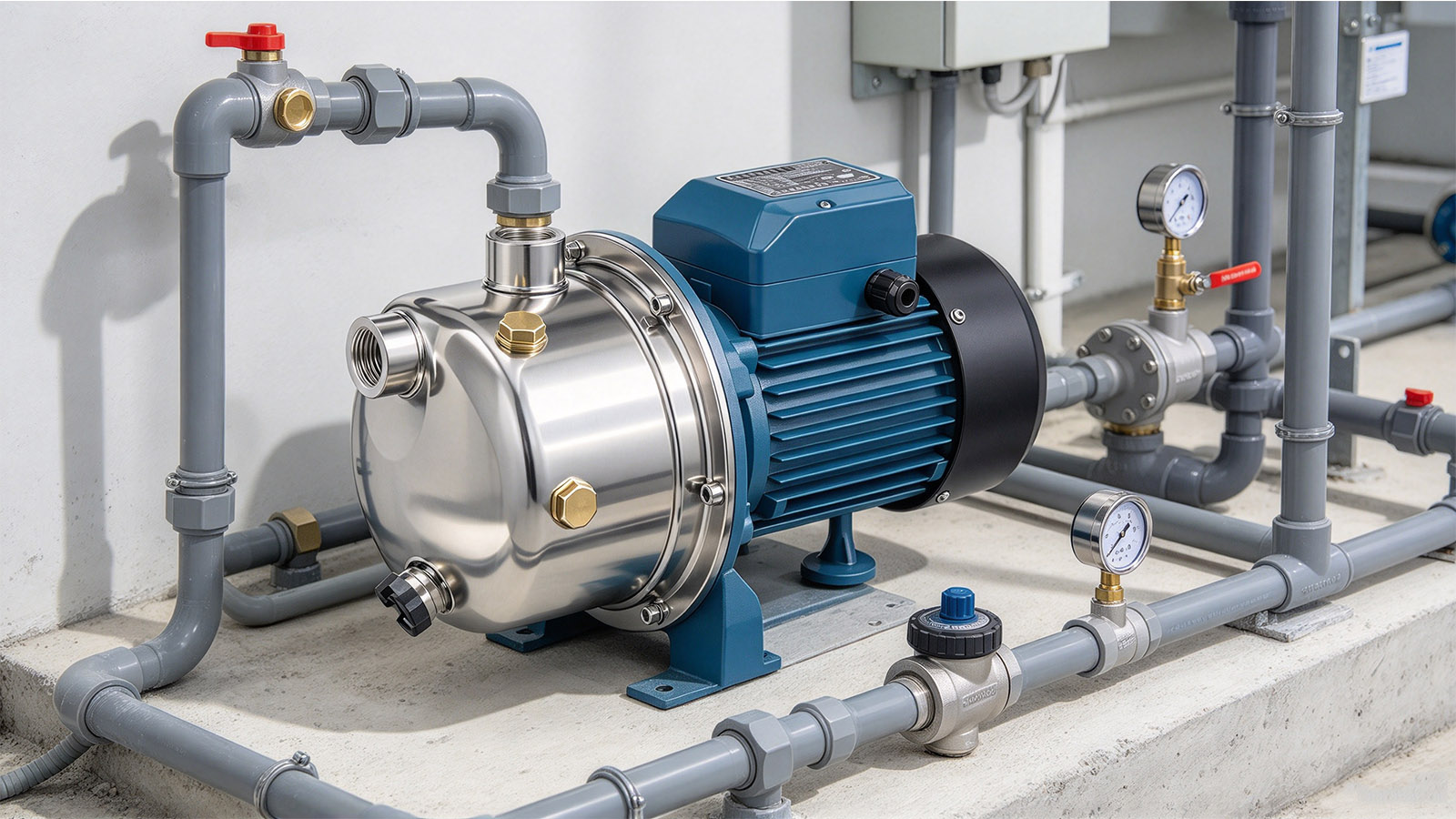
How to Prime a Jet Pump: First Start, Lost Prime and Dry-Run Damage
The crew has finished. Pipework is in, the tank is charged, the breaker goes on – and the pressure gauge does not move. The motor is running, so nobody thinks of air. Yet on a surface-mounted jet pump, air in the casing is the whole problem: the impeller can push water, but it can only spin air. Usually the unit is not faulty. It has not been primed, or it lost its prime overnight.
That distinction has a price tag. A re-prime is clean water and a spanner; a dry-run seal replacement is a warranty claim, a second shipment and a site visit. For distributors and OEM buyers, priming is not a homeowner chore – it is a commissioning step, a spare-parts line and a page in the manual. This guide covers the sequence, the failure evidence and the documents worth asking a factory for.
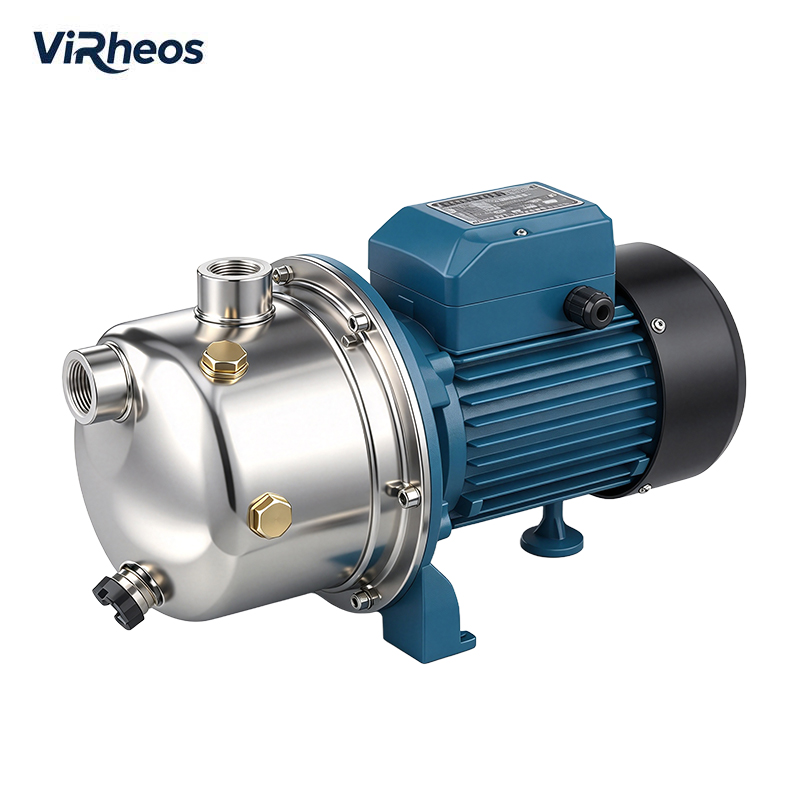
The short answer
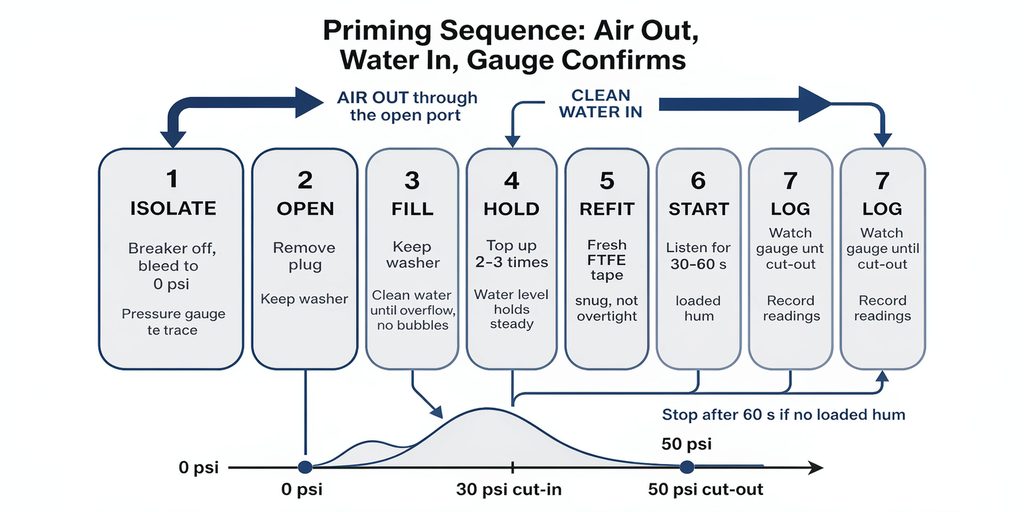
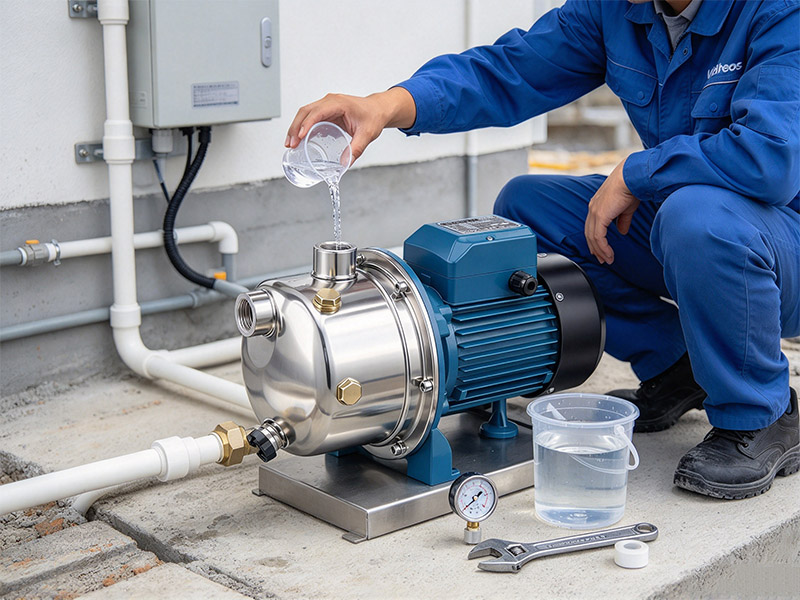
In short: kill the power, bleed to zero, fill the casing and suction line through the priming port until water overflows and bubbles stop, refit the plug airtight, restore power briefly and listen for the loaded tone, then let the gauge climb to cut-out and write the numbers down. If the jet pump does not catch within a minute, stop. Do not keep it running to see what happens.
Table 1. A nine-step priming sequence, with the pass signal at each stage.
| Step | What to do | Pass signal | What a failure looks like |
| 1 Isolate | Breaker off, open a low tap, wait for 0 psi | Gauge at zero; motor cannot self-start | Gauge still holds pressure – tank or valve fault |
| 2 Inspect | Suction line short, airtight, rising toward the pump | No sagging runs or high points | A dip traps air after every stop |
| 3 Open port | Remove the 1/2 or 3/4 in NPT plug on the volute | Port clear, washer intact | Flattened washer is an air path |
| 4 Fill | Clean water through a narrow funnel, slowly | Steady overflow, no more bubbles | Foam persists – air pocket or empty line |
| 5 Hold | Top up two or three times; on two-pipe rigs fill the drive line too | Water level stays at the port | Level falls – foot or check valve leaking |
| 6 Refit plug | Fresh PTFE tape, snug rather than overtight | No hiss once running | Whistling at the plug means air ingress |
| 7 Test start | Close the downstream tap, restore power, listen | Loaded tone within 30-60 s | Whiny dry pitch at 60 s – switch off |
| 8 Build pressure | Let it reach cut-out, e.g. 50 psi on a 30/50 switch | Clean cut-out, no short cycling | Hunting points to wrong tank pre-charge |
| 9 Log baseline | Record cut-in, cut-out, amp draw, time to cut-out, date | Repeatable numbers on the sheet | Without this row, later faults are guesswork |
Why a jet pump needs priming at all
A jet pump is a centrifugal machine with a venturi ejector on the suction side. The impeller sends part of its discharge through a narrow nozzle; the fast stream drops in pressure and entrains fresh water from the well. That works only if the casing and suction pipe hold one unbroken column of water. Water barely compresses, so the impeller can build a vacuum against it. Air compresses, so the same impeller just churns. The jet pump sounds busy and delivers nothing.
Two small parts exist purely to protect that column. The priming plug on top of the volute is where air leaves and water goes in. The foot valve at the bottom of the suction line is a one-way strainer: open while running, shut under the weight of the column so the pipe stays full overnight. If either side leaks, the column drains back and the sequence starts again.
Depth is part of the same story. Atmospheric pressure sets a hard ceiling near 25 ft of vertical lift, so a jet pump fighting an overlong suction line is fighting physics, not a dirty nozzle. No extra priming water fixes that. The figures are set out in Note 1.
Why isn’t my jet pump pumping water?
Work from evidence, not from the parts catalogue. A suction-side leak is the awkward one: the pipe is under vacuum, so it pulls air in instead of dripping water out. There is no puddle. Brush soapy water over each union while the jet pump runs and watch where the film gets sucked in. A pinhole in a threaded 1-1/4 in union is enough to collapse the vacuum. Old galvanised line with corrosion pitting behaves the same way.
Next, see whether the system holds what you put in. Prime it fully, kill the power, close the discharge side and watch the gauge. Steady for half an hour means tight suction and a seating foot valve. A slow bleed-down means water is going back down the well – a worn flapper, grit on the seat, a cracked check valve. A screwdriver held against the casing often picks up the gurgle of backflow.
Then check the water. Measure the static level in the driest week, not the day after rain. If the intake is barely submerged, a vortex pulls air at peak draw and the taps sputter. After a long dry spell, a jet pump that used to hold prime may simply be reaching above its water. The rest are easier to confirm: a blocked ejector nozzle, a worn impeller or diffuser, pitted switch contacts, a waterlogged tank, or a three-phase motor wired backwards.
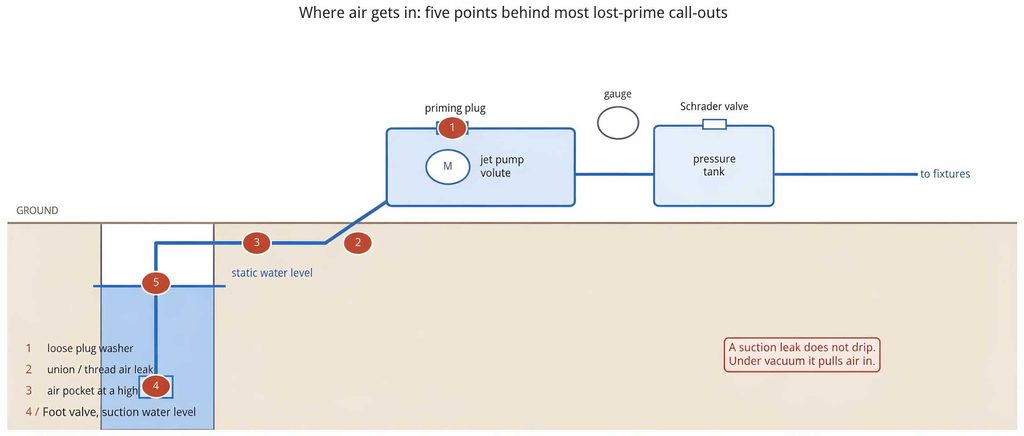
Table 2. Field checklist: symptom, quick check, usual fix, spare to carry.
| Symptom | Quick field check | Usual fix | Spare to carry |
| Runs, gauge near 0-10 psi | Soapy water on suction joints, inspect plug washer | Re-tape the union, renew the washer | PTFE tape, priming plug gasket |
| Prime fades overnight | Prime, isolate, watch gauge for 30 min | Replace leaking foot or check valve | Brass or 316 foot valve |
| Sputtering taps, air in lines | Measure static level in the driest week | Extend intake, clear the strainer screen | Extra pipe length, screen |
| Motor hums, no flow | Check rotation against nameplate; backflush nozzle | Correct wiring, clean the ejector kit | Nozzle and diffuser kit |
| Starts every few minutes | Press Schrader valve – water instead of air | Replace waterlogged tank; set pre-charge 2 psi below cut-in | Bladder tank, tyre gauge |
| Never reaches cut-out | Compare actual lift with the ~25 ft envelope | Reduce friction or move the intake closer | Larger-diameter suction pipe |
| Gauge climbs then falls after stop | Listen at the casing for backflow | Clean or replace the foot valve screen | Screen, stiff brush |
| Hot casing, burnt smell after dry start | Stop at once; inspect seal and windings | Fit loss-of-prime protection, renew the seal | Shaft seal, thermal protector |
Can a jet pump run without water?
It can turn without water, and that is exactly the danger. A mechanical seal works on a thin liquid film between its faces – that film limits friction, carries heat away and keeps the faces flat. Remove it and the faces touch. Seal engineering guidance describes rapid temperature rise, blistering and distortion within seconds to a few minutes on a centrifugal pump; carbon faces char, elastomers harden, and the leak that follows is often misread as an unrelated fault a week later.
One rule beats any catalogue claim: if the jet pump has not caught within 60 seconds, switch off. Re-prime once, then hunt the air entry point. Two failed attempts are a diagnosis, not an invitation for a third. On unattended irrigation or booster sites, specify a low-level or loss-of-prime cut-out, a flow switch or a current-sensing dry-run protector, plus motor thermal overload. A jet pump left humming in an empty casing turns a five-minute procedure into a replacement order.
This logic now sits in product safety work too. The 2024 edition of IEC 60335-2-41 covers abnormal operation of household and similar electrical pumps, dry running included, with the thermal protector expected to operate. For a buyer that is a useful enquiry line: show the protection wiring, not just the horsepower.
Do jet pumps need priming?
Yes – on first start, and again whenever air enters the casing or suction line. A power cut, a drained tank, a foot valve stuck open, a union working loose, or a seasonal drop in the water table can all do it. ‘Self-priming’ on a label is easy to misread: those units recirculate water to purge air, but still need a filled casing to begin. They are not a substitute for a sound suction line.
Configuration changes the work, not the requirement. A shallow-well jet pump has the ejector in the pump body and one suction pipe, so one fill usually does it. A deep-well or convertible jet pump puts the ejector down the bore with a drive line and a suction line; both must be filled, and a leaking foot valve down there means pulling the drop pipe. A submersible unit sits below the water line and has no priming step – worth remembering when a ‘lost prime’ complaint arrives on a downhole job. It is usually a drained tank or a leaking check valve instead.
What a surface-pump catalogue should ship with the unit
Look at how a factory files the jet pump. It usually sits with peripheral, monoblock and booster units in the surface-pump family, sharing a motor platform, a pressure switch and a tank. That helps a distributor: one priming kit covers several article numbers, and one instruction sheet serves a whole range. It is also where cheap programmes go wrong – the pump ships, the 50-cent washer and the foot valve do not.
A workable kit has six things in the carton: a spare priming plug gasket, a correctly sized foot or check valve, a nozzle-and-diffuser ejector kit, a mechanical seal, a capacitor and a pressure switch. Add PTFE tape or a potable-water sealant. The manual should show the priming port and thread size, the fill volume, the allowed start attempts, the 30/50 or 40/60 switch setting, tank pre-charge and dry-run wiring. A photograph of the port beats a paragraph of prose.
For OEM and ODM orders, settle voltage (115/230 V or 230/400 V), frequency, nameplate language, carton marking and the spares pack before sample approval. Ask for a prime-holding check before packing: fill, isolate, hold the gauge 30 minutes, record it against the serial number. A jet pump that arrives with that record and the little bag of consumables generates far fewer tickets than a cheaper unit needing a second shipment three weeks later.
Why a five-minute procedure carries real cost
Priming looks small until it is multiplied by an installed base. Agriculture took 24.0% of 2025 pump revenue and Asia Pacific 45.2%, in a market worth USD 74.5 bn in 2025 and forecast at USD 103.3 bn by 2033 (4.4% CAGR). Agriculture also accounts for roughly 70% of global freshwater withdrawals; groundwater supplies about 25% of irrigation water and about half of domestic freshwater withdrawals. A pump that will not hold prime during an irrigation window stops more than a motor.
- Source: Grand View Research, Water Pump Market Size & Share Report 2026-2033, 8 April 2026 (2025 USD 74.5 bn; 2033 USD 103.3 bn; 4.4% CAGR; APAC 45.2%; agriculture 24.0%); UN-Water / UNESCO, World Water Development Report 2024, Statistics (70% / 25% / half).
The household side is just as concrete. The US national domestic well database holds 5,982,715 records with construction data through 2024. A 2023 study sampled 44 private wells in California’s western Central Valley, where more than two million residents rely on private wells for drinking water. Every surface system there is a potential lost-prime call-out after a power cut or a dry summer.
- Source: USGS, Synthesized Domestic Well Database for the Conterminous United States, data release 14 January 2026 (5,982,715 records, 1680-2024); USGS SIR 2026-5069, Quality of Groundwater Used for Domestic Supply in the Western Central Valley, California – 2023 (44 wells).
Two worked site examples
The public figures above are measured. The two stories below are worked examples built on the published failure modes and settings in Note 1 – not third-party field measurements or named customer records.
- Case A – the overnight fade. A 1 hp shallow-well jet pump on a 6-in borehole stands at 4.5 m static in September and 7 m in May, with a 1-1/4 in suction line, a 30/50 psi switch and an 80 L tank. It primes on Monday, then every morning the gauge reads zero. Three re-primes later, soapy water finds nothing on the straight runs; the culprits are a pinhole at the wellhead union and a foot valve screen furred with silt. Re-tape the union, fit a brass foot valve, set tank pre-charge to 28 psi, log the new cut-in times. Parts are cheap. Three site visits are not – which is the argument for putting them in the original carton.
- Case B – the first start that went wrong. A contractor commissions a batch of surface units and, pressed for time, energises one before filling the casing. The motor hums about 90 seconds with no flow. By the time anyone isolates the breaker, the mechanical seal has scored and the casing is hot. The revised start sheet has five lines: lock out, fill until bubbles stop, listen for the loaded tone within 60 s, two attempts maximum, record amp draw. The next batch ships with a loss-of-prime cut-out and a spare seal per carton. The pump never changed; only the procedure did.
Documents worth asking for
Priming is commissioning, so the paperwork should prove the machine was built for it. Ask for a Q/H curve with a named ISO 9906 acceptance grade – 1B, 2B and so on – and a serial-numbered test report; a curve without a grade is a sales drawing. IEC 60529 IP68 applies to downhole motors, but a surface motor still needs its IEC 60034 or NEMA MG1 rating and a declared insulation class. Wetted parts in drinking water need an NSF/ANSI 61 listing, not a generic ‘food grade’ claim.
For EU-bound orders, Regulation (EU) 547/2012 uses the Minimum Efficiency Index: MEI >= 0.40 removes the least efficient 40% of surveyed pump models. ESPR entered into force in July 2024 and a review of pump rules is under way, so leave efficiency headroom. Most useful here: ask for the factory prime-holding record and the dry-run protection schematic. Those two sheets say more about the first week on site than a glossy catalogue.
- Source: European Commission, Ecodesign – Water Pumps, Regulation (EU) 547/2012 and MEI >= 0.40; ESPR, July 2024; IEC 60335-2-41:2024, ISO 9906, IEC 60034, NSF/ANSI 61, current editions. Dry-running seal behaviour follows current seal-engineering guidance, not an annual statistic.
Six priming lines to put on the enquiry
A quotation request usually covers flow, head, voltage and packing. Add six lines that protect the first start: a dimensioned drawing of the priming port and its thread; the fill volume for casing and suction line; the ship-with spares list; dry-run and loss-of-prime protection wiring; the language set for the installation sheet; and a factory prime-holding record with serial numbers. Send the same six lines to two or three qualified manufacturers and compare replies side by side. The cheapest jet pump quote with the thinnest paperwork is rarely cheap to own.
Frequently asked questions
- Why isn’t my jet pump pumping water?
- Most often air, not a failed motor. Check in order: a suction-side leak pulling air in, a foot valve that will not hold the column, a static level below the intake, a blocked ejector nozzle, a waterlogged tank, then the pressure switch and motor rotation. Soapy water on the joints and a 30-minute gauge hold test separate the first two quickly.
- Do jet pumps need priming?
- Yes, on first start and after any air entry – a power cut, drained tank, sticking foot valve or seasonal drop in the water table. Self-priming units still need a filled casing to begin. Deep-well two-pipe versions need both lines filled. A submersible pump has no priming step.
- Can a jet pump run without water?
- It will turn, but it should not. The mechanical seal needs a liquid film for cooling and lubrication, and damage starts within seconds to a few minutes. If a jet pump has not caught within 60 seconds, switch off, re-prime once, then find the air entry point. Fit loss-of-prime protection on unattended sites.
- How do I prime a jet pump?
- Isolate power and confirm 0 psi, open the priming plug on the volute, pour clean water in slowly until it overflows and bubbles stop, top up two or three times so the suction line stays full, refit the plug with fresh PTFE tape, restore power and listen for the loaded tone within 30-60 s, then let the gauge reach cut-out and log cut-in, cut-out, amp draw and time.
- How long should a first prime take?
- A straightforward shallow-well fill is half an hour to an hour on site, including draining the tank and checking joints. Two or three fill-and-purge cycles are normal when the line was fully drained. If it still will not catch after two attempts, stop chasing water and start chasing the leak.
- What should a jet pump ship with?
- At minimum: a spare priming plug gasket, a correctly sized foot or check valve, a nozzle-and-diffuser kit, a mechanical seal, a capacitor, a pressure switch and thread sealant, plus a manual showing the port, switch setting, tank pre-charge and dry-run wiring.
What to do next
Put the nine-step sequence on the commissioning sheet, add the six priming lines to the next enquiry, and ask for a prime-holding record with each serial number. A jet pump that arrives with a clear procedure, a small bag of consumables and a documented dry-run cut-out is the one still holding prime after the first power cut.
References
1.Title: Steady and Unsteady Flow Characteristics inside Short Jet Self-Priming Pump
Abstract: This paper numerically and experimentally investigates internal flow, pressure pulsation and instability of compact self‑priming jet pumps, relevant to priming, backflow and vibration during startup.
Abstract: Experiments examine pump performance deterioration under suction air entrainment, the core root of lost prime in surface jet pump installations.
3.Title: Pump Dry Run Prevention System
Abstract: This work discusses dry‑run hazards for centrifugal pumps; air‑bound priming failure quickly damages mechanical seals and requires protective interlocks.