
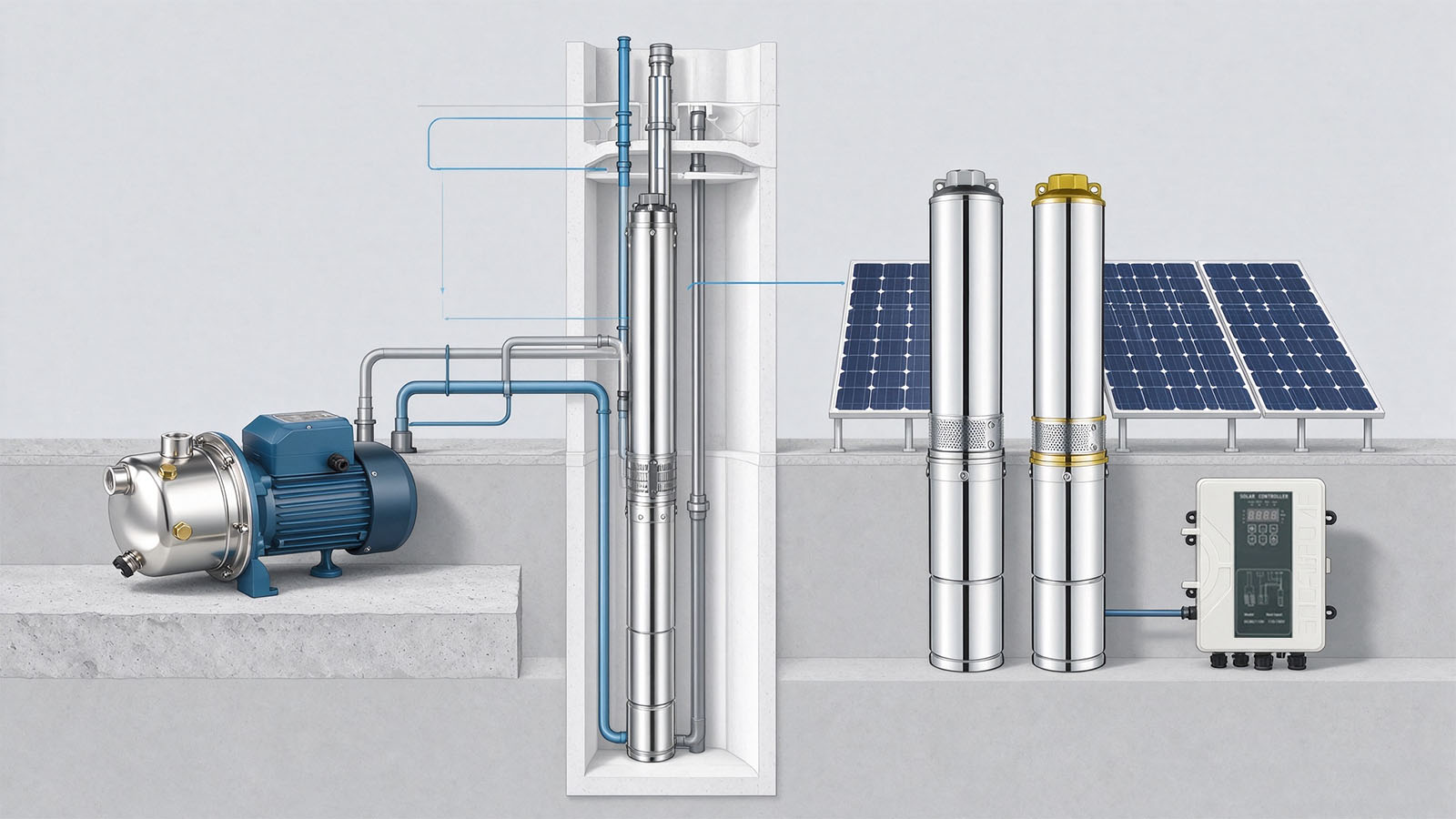
Types of Borehole Pump: Submersible vs Jet vs Solar
In January 2025, India’s Central Ground Water Board published its groundwater level bulletin for Madhya Pradesh: 62% of monitored wells recorded a water-level decline between January 2024 and January 2025. That followed a monsoon that delivered normal to excess rainfall across most of the state. In the deeper aquifers, 70% of wells fell between May 2024 and January 2025, driven by post-monsoon irrigation pumping.
That number is the most useful thing to know before you specify a borehole pump in 2026. Water is not staying where it was. A borehole that delivered comfortably from 30 m five years ago may now have to lift from 45 m, and every extra metre is paid for twice: once in the bigger pump, and again in every kilowatt-hour for the next decade.
This guide compares the three borehole pump families that actually get installed – submersible, jet and solar – using 2025 and 2026 field data rather than catalogue adjectives. It covers what each can and cannot do, what they cost in the real world, and the questions buyers keep asking.
Why Borehole Pump Selection Got Harder After 2023
Two things changed at once: water tables moved down, and energy stopped being cheap enough to ignore.
In Nebraska, the Conservation and Survey Division at the University of Nebraska-Lincoln measured 4,695 wells between spring 2024 and spring 2025: average decline 0.29 ft, 62% of wells lower than the previous spring, a quarter losing more than a foot, and Panhandle wells down 10 to 15 ft. Some of those wells were drilled decades ago and are too shallow to absorb the decline.
India shows the same pressure at scale. The Central Ground Water Board recorded depth to water of 20 to 40 m across parts of Burhanpur, Betul and Bhind, and more than 40 m in deeper aquifers in six districts. The rule that follows is widely ignored: size against the worst month’s pumping level, plus margin.
Energy is the other half. Motor-driven systems take roughly 70% of industrial electricity worldwide, and pumping is the largest single category inside that. A borehole pump bought 10% cheaper but 15% less efficient is not a saving – it is a bill you pay monthly for fifteen years.
Regulators have noticed. Under Ecodesign Regulation (EU) 2019/1781, as amended by (EU) 2021/341, most three-phase motors from 0.75 kW to 1000 kW have had to meet the IE3 level since 1 July 2021. From 1 July 2023, single-phase motors of 120 W to 1000 kW must meet IE2, and motors of 75 to 200 kW must meet IE4. The motor’s efficiency class is now a compliance document, not a footnote. Ask for it, and for the pump’s ISO 9906 test curve.
Type 1 – Submersible Borehole Pumps
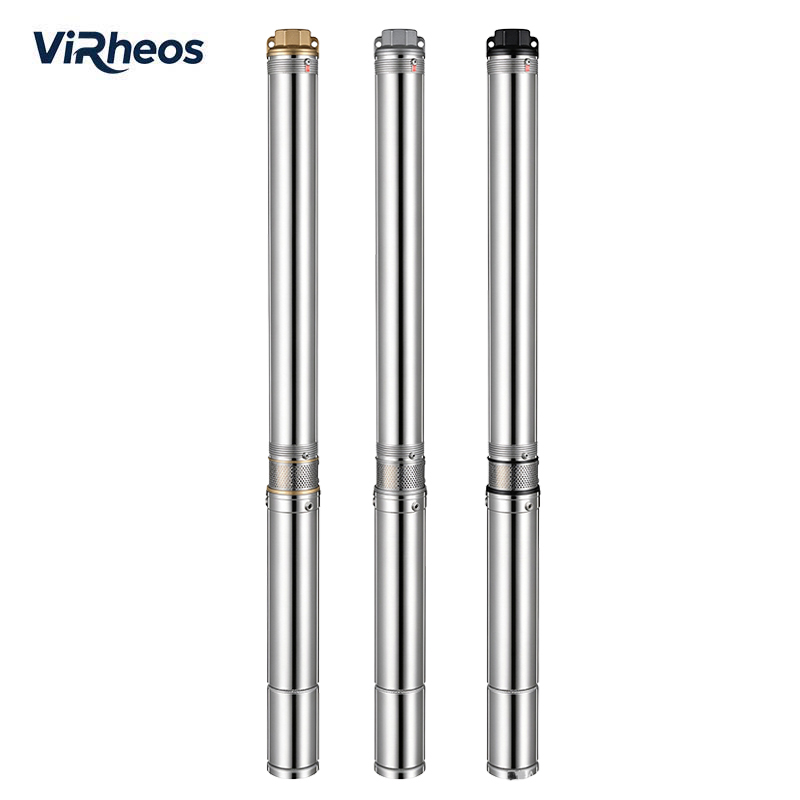
A submersible borehole pump is a sealed motor coupled to a stack of impellers and diffusers, lowered down the casing below the dynamic water level. It pushes rather than sucks, which removes the atmospheric ceiling; depth then becomes a question of pressure rating, cable and cooling.
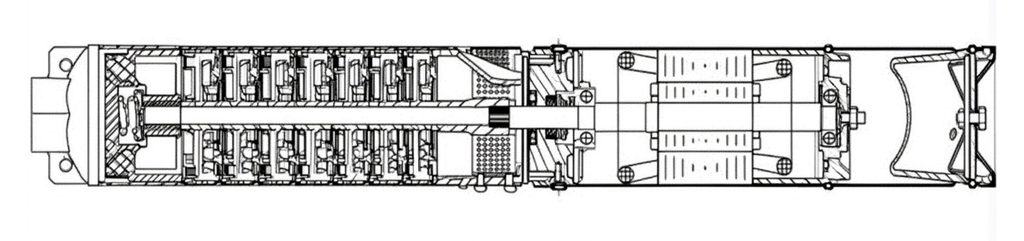
Across mainstream production units the specification envelope looks roughly like this:
- Diameter: 4 in (100 mm), 6 in (150 mm) and 8 in (200 mm), matched to casing with clearance.
- Head and flow: from about 20 m and 1 m3/h on a small 4 in model, to well past 300 m and several hundred m3/h on large 6 in or 8 in units.
- Efficiency at best efficiency point: realistically 55-75%. Small 4 in low-flow models sit lower, sometimes 40-65%, because stage friction eats into the hydraulic gain.
- Water limits: solids usually at or below about 0.01% by mass, pH 6.5-8.5, chloride capped near 400 mg/L for standard stainless, submersion often limited to roughly 70 m.
- Sand: tender documents and warranties commonly assume no more than about 50 g/m3.
Eight sub-types cover almost every commercial enquiry:
- Single-stage vs multistage. Single-stage moves a lot of water a short distance; multistage stacks impellers to build head, which a deep borehole needs.
- By diameter: 4 in, 6 in, 8 in and above, against casing internal diameter.
- Radial vs mixed-flow hydraulics. Radial builds more head per stage; mixed-flow pushes toward flow.
- 2-wire vs 3-wire starting. A 2-wire unit keeps the capacitor inside the pump; a 3-wire unit puts the control box above ground, where it can be swapped without pulling the pump.
- By wetted materials: cast iron and bronze for budget duty, 304 or 316 stainless for potable and mildly aggressive water, duplex where chloride is high.
- By supply: single-phase AC, three-phase AC, DC, and AC/DC hybrid that runs on array or grid.
- Helical rotor, or progressive cavity: low flow, better sand tolerance, for low-yield boreholes.
- Borehole dewatering and drainage units, for shafts and sumps rather than clean supply.
For a borehole pump buyer the strengths are hard to argue with: high head, silent running, no priming, no frost risk, the motor cooled by the water around it, and no pump house needed. The weak spots are just as real. Servicing means pulling the pump, so a cable fault becomes a well intervention. Sand and dry running cut life short, and upthrust and water hammer need guarding.
Type 2 – Jet Pumps
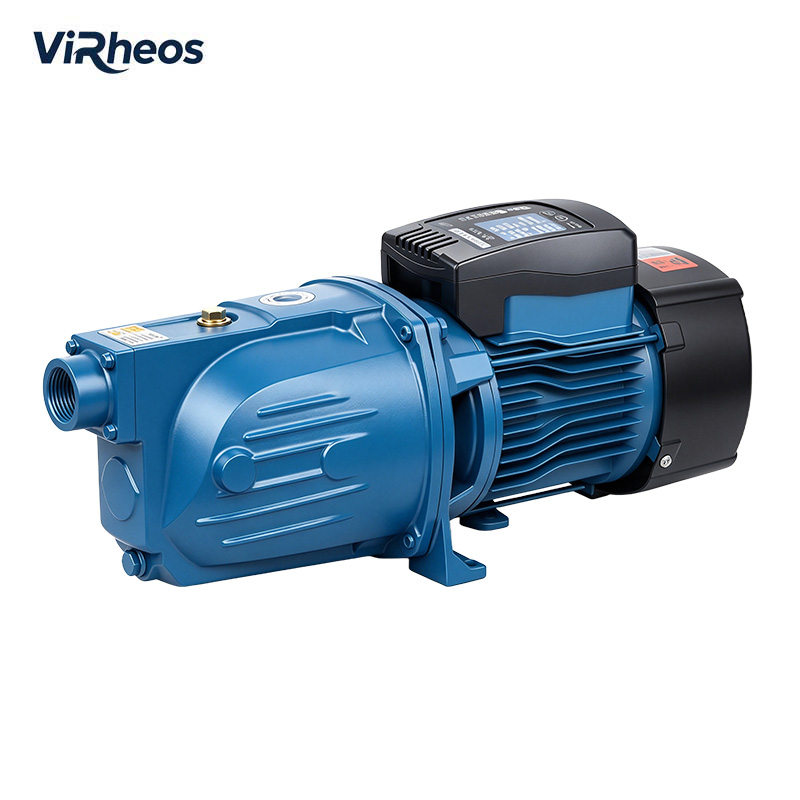
A jet pump sits above ground and pulls. That is the whole story, and also the whole limitation.
Atmospheric pressure can only push water about 10.3 m (33.9 ft) up a suction pipe in a perfect vacuum. Real pumps, coping with friction, vapour pressure and altitude, manage about 7.6 m (25 ft). More horsepower does not raise that ceiling. A shallow-well jet pump, with its ejector built into the pump body and one pipe to the water, is practically limited to roughly 22 to 25 ft.
A deep-well or convertible jet pump puts the ejector down the hole and runs two pipes. Because it pushes from the bottom rather than sucks from the top, it escapes the suction limit: practical lift is commonly quoted around 85 ft, and convertible models serve wells to about 90 ft.
The catch is efficiency. A jet pump recirculates part of its own discharge through a nozzle to create suction, so it moves more water internally than it delivers and burns more power per cubic metre than a submersible borehole pump of the same duty. It must also be primed before it will start, and any air leak on the suction side means lost prime. Sand erodes the nozzle quickly.
They still earn their place: water within 25 ft of the surface, dug wells, cisterns, pond and lake intakes, seasonal cabins, and any site where servicing means hiring a rig. They stop being right once the pumping level drops past 25 ft, the water carries sand, or the pump sits next to a bedroom wall.
Type 3 – Solar Borehole Pumps
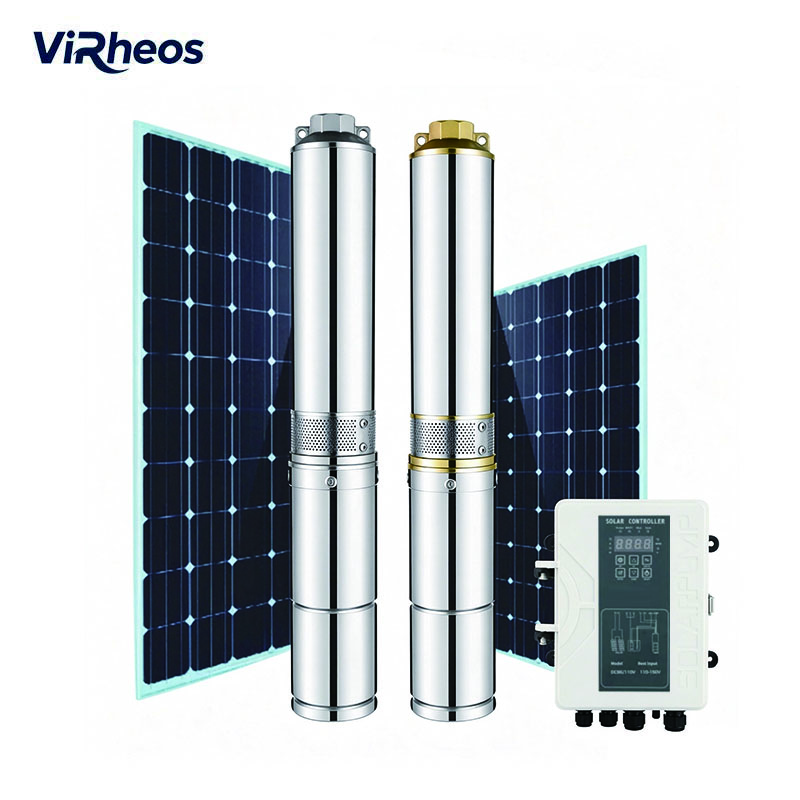
Solar splits into two hardware families, and confusing them causes most bad purchases here.
Solar surface pumps suit sources less than about 7 m deep – rivers, ponds, hand-dug wells. Leading models deliver roughly 800 litres per hour, cover about 0.5 ha, and retail around USD 315-380 for the core pump and panel set. Solar submersible borehole pumps matter more here: built for boreholes to about 50 m, with smallholder packages from USD 600-1,000. Entry systems for farms of 0.25 to 2 ha retail from about USD 520-650, and pay-as-you-go financing brings the upfront payment down to 10-30% of system price. Adding distribution – pipes, drip lines, sprinklers – typically adds USD 500-1,000 per acre, and pairing a pump with drip can improve water-use efficiency by up to about 70% against flood irrigation .
This is no longer pilot scale. IRENA’s Off-grid Renewable Energy Statistics 2025 put global off-grid solar PV at roughly 4.1 GW at the end of 2024, about half serving agriculture and mini-grids. India accounts for around 90% of agricultural solar pumps deployed worldwide.
Policy is the other engine. Under India’s PM-KUSUM scheme, as of 30 December 2025: 1,315,190 standalone pumps sanctioned and 975,277 installed, plus 1,189,787 of 3,527,492 feeders solarised. Cost sharing runs 30% central, 30% state, 40% farmer, though farmers using bank finance often put down only about 10% upfront. In Uganda, a World Bank learning note on the Micro-Scale Irrigation Program records average equipment cost at USD 6,700 per hectare in June 2023 and USD 6,465 in June 2024, with government covering up to 75% of solar equipment cost – against USD 10,000-12,000 per hectare for conventional large public schemes.
The limits matter too. Output follows the sun, so a solar borehole pump is sized for daily volume, not peak flow. You need somewhere to put the water: a tank, a pond, or soil moisture under drip. Overcast days are a real risk with no buffer, and deep boreholes push cost up.
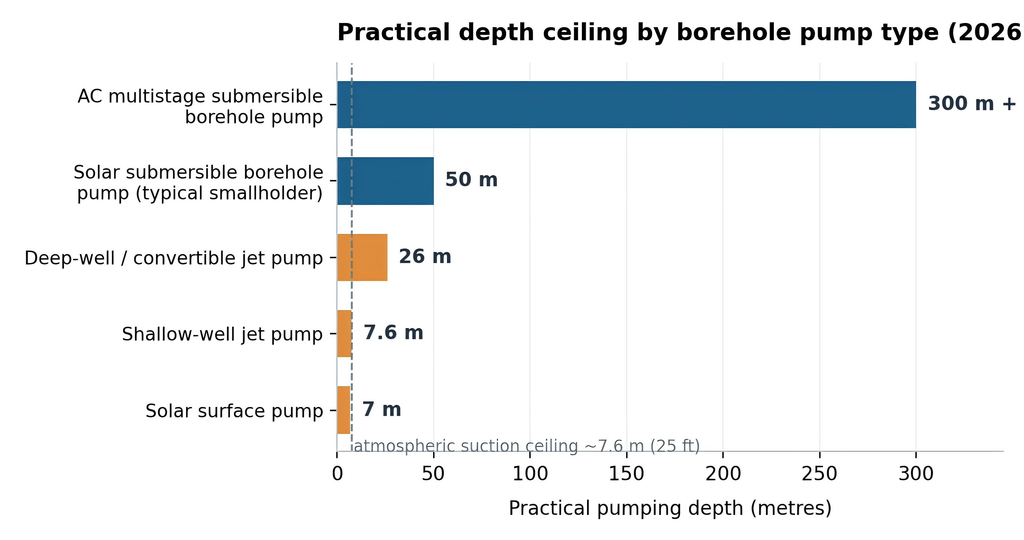
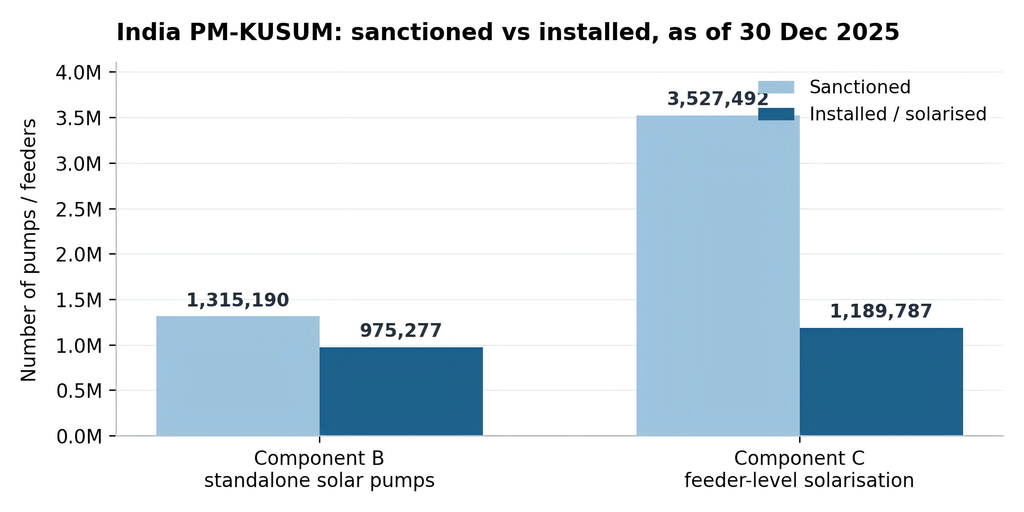
Table 1 – Submersible vs Jet vs Solar Borehole Pump Comparison
| Attribute | Submersible borehole pump | Jet pump | Solar borehole pump |
| Where it sits | Down the hole, below pumping level | Above ground | Down the hole or on the surface |
| How it works | Pushes, using stacked impeller stages | Pulls, using a venturi ejector | Pushes; DC or AC/DC motor from a PV array |
| Practical depth | No fixed ceiling; 100-300 m+ routine | About 7.6 m (25 ft) shallow, about 26 m deep | About 7 m surface, about 50 m submersible |
| Typical flow | 1 to 500+ m3/h | About 0.5-10 m3/h | About 0.8 m3/h smallholder, tens on schemes |
| Efficiency | About 55-75% at best point | Lower; recirculates discharge | Pump about 50-70%; depends on array sizing |
| Grid needed | Yes | Yes | No, though back-up is often added |
| Upfront cost | Medium to high | Lowest | Medium to high; array dominates |
| Running cost | Electricity | Electricity, more of it per m3 | Near zero fuel or power |
| Service access | Must pull the pump | Hand tools, all above ground | Must pull the pump |
| Sand tolerance | Moderate; specify a solids limit | Poor; erodes nozzle and venturi | Moderate |
| Best for | Deep boreholes, high head | Shallow sources, easy servicing | Off-grid sites with storage |
Table 2 – Borehole Pump Selection by Scenario, With 2024-2026 Cost Markers
| Scenario | Water level | Right borehole pump | Cost marker | Note |
| Pond, cistern or dug well; small plot | Under 7 m | Solar surface or shallow-well jet | USD 315-380 core pump and panel | About 0.5 ha at 800 L/h |
| Borehole, smallholder irrigation, 0.25-2 ha | 20-50 m | Solar submersible borehole pump | USD 600-1,000 package; USD 520-650 entry system | Add USD 500-1,000 per acre for drip |
| Household or small farm, reliable grid | 30-80 m | AC multistage submersible, 4 in | Equipment only; installation extra | Size on worst-month level |
| Deep borehole: village supply or scheme | 80-300 m+ | AC multistage submersible, 6-8 in, IE3+ motor | Highest capex, lowest cost per m3 | Check ISO 9906 curve and IE class |
| Shallow source, service access is priority | Under 25 ft | Shallow-well jet pump | Lowest capex | Will not lift deeper; keep it frost-free |
| Community irrigation scheme, 5-50 ha | Variable | Solar scheme 5-15 kW, or grid submersible with VSD | USD 6,465/ha micro-irrigation, Uganda, June 2024 | vs USD 10,000-12,000/ha public schemes |
| Sandy or low-yield borehole | Any | Helical-rotor or sand-tolerant multistage | Premium over a standard unit | Get the solids limit in writing |
| Existing borehole, level has dropped | Deeper than design | Re-rate: more stages or bigger diameter | Re-pumping often costs more than the pump | Re-measure the level first |
Three Field Cases From 2024-2026
Case 1: deepening aquifers in central India
The Central Ground Water Board’s January 2025 bulletin found 62% of wells declining year on year despite good recharge, and 70% of deeper aquifer wells falling between May 2024 and January 2025. On the ground: 4 in units sized for 30 m of head replaced by 6 in multistage units sized for 50 to 70 m, with cable, starter and motor rating moving too.
Case 2: the slow squeeze in Nebraska
4,695 measured wells averaged a 0.29 ft decline between spring 2024 and spring 2025, with 62% lower and a quarter losing more than a foot. Panhandle wells fell 10 to 15 ft, and some were drilled decades ago, too shallow to absorb the decline. When a well is re-drilled the pump is re-specified.
Case 3: solar borehole pumps at national scale
975,277 of 1,315,190 sanctioned standalone pumps were installed as of 30 December 2025. Feeder-level solarisation, at 1,189,787 of 3,527,492, lags far behind: retrofitting grid-connected pumps is harder than dropping a standalone unit into a field. The takeaway is geographic – in high-volume markets the installer base and spares network now exist.
The Questions Buyers Actually Ask
- What are the different types of borehole pump?
- Three families, and most confusion comes from mixing them up. Submersible units go down the hole and push. Jet pumps stay on the surface and pull, which caps them near 25 ft of suction lift. Solar units are usually submersible borehole pumps with a DC or AC/DC motor fed by a PV array.
- What are the different types of submersible borehole pump available?
- Eight that matter commercially: single-stage and multistage; 4 in, 6 in, 8 in and larger; radial versus mixed-flow hydraulics; 2-wire versus 3-wire starting; cast iron, 304/316 stainless or duplex wetted parts; single-phase AC, three-phase AC, DC and AC/DC hybrid; helical-rotor units for sandy or low-yield boreholes; and dewatering or drainage units.
- What are the different types of borehole, and does it change the pump?
- Four: dug wells (wide, shallow, seasonal); driven or sand-point wells (narrow, usually under 10 m); drilled boreholes (a narrow cased hole, commonly 100 mm, 150 mm or 200 mm); and artesian boreholes, where water rises under its own pressure. Casing diameter sets the pump diameter, depth and drawdown set the head, yield sets the flow, and sand and chemistry set the materials.
- What is the best submersible borehole pump?
- There isn’t one, and any answer naming a single model is selling you something. The right unit is the one whose certified curve crosses your duty point – your flow at your total dynamic head – inside its preferred operating region, with a compliant motor, materials matched to your water, and service you can reach.
- How do I work out what size borehole pump I need?
- Three numbers, no modelling required. The dynamic water level, measured in the worst month. The flow you need at peak. The pressure you want at the tap or sprinkler. Add lift, delivery height, pipe friction and target pressure to get total head, then read the pump’s curve at that head. The costly mistake is buying oversized for safety: it runs away from its best efficiency point and wears seals early.
- Which manufacturers are worth considering for water well pumps?
- Shop the file, not the logo. Ask for the ISO 9906 test curve for the exact model and stage count, the motor’s efficiency class certificate, material certs for wetted parts, NSF/ANSI 61 and 372 if the water is for drinking, and warranty terms covering sand, dry running and voltage faults. Then ask who stocks spares and who pulls the pump. One question separates manufacturers from resellers: will they tailor stage count, cable length and materials to your duty, and issue a per-unit factory test report rather than a catalogue page?
- Are solar borehole pumps worth it in 2026?
- Where grid power is expensive, unreliable or absent and you can store what you pump, yes – the operating cost argument is settled. It stops being obvious when you need water on a fixed schedule regardless of weather, when the borehole is deep enough that the array gets expensive, or when there is nowhere to store daytime output.
- What actually kills a borehole pump?
- Running dry when the level drops below the pump, sand abrasion, voltage imbalance or single-phasing, repeated start-up upthrust, insufficient submersion for motor cooling, water hammer, and chronic oversizing. Nearly all of it is preventable with dry-run protection, a correctly sized cable, a check valve and honest sizing.
Pre-Order Checklist
Get these twelve answers before you ask anyone for a borehole pump price.
- Static and dynamic water level, measured in the worst month, not estimated.
- Sustainable yield. A pump cannot deliver more than the aquifer gives.
- Total dynamic head: lift, delivery height, target pressure and pipe friction.
- Casing internal diameter, with clearance for the borehole pump body and cable.
- Sand and silt content in writing, matched to the pump’s published solids limit.
- Water chemistry: pH, chloride, iron, hydrogen sulphide, total dissolved solids.
- Power: phases, voltage stability, cable distance – or solar resource and array space.
- Duty cycle: hours per day and starts per hour.
- Compliance: motor efficiency class, pump efficiency index, ISO 9906 test report.
- Protection: dry-run, under and over-voltage, upthrust, lightning.
- Service: who pulls it, who stocks spares, and the real lead time.
- Documentation: test certificate, material certs, wiring diagram, O and M manual.
The Bottom Line
Decide on depth first. It eliminates an entire family of borehole pumps before you look at a single price.
- Water within about 7.6 m (25 ft), and service access matters more than efficiency: a jet pump is still a rational buy.
- Deeper than that, on reliable grid power: a multistage submersible borehole pump, sized on the worst-month dynamic level, bought with a certified curve and a compliant motor.
- Deeper than that, off grid or on expensive grid: a solar submersible borehole pump with storage, sized for daily volume rather than peak flow.
Materials, stage count, starting method and protection separate a pump that lasts fifteen years from one you pull out in three. Get the four borehole numbers right – casing diameter, static level, dynamic level and yield – before you ask for a quote.
References
- his paper explores farmer preferences for solar irrigation pumps under India’s PM-KUSUM scheme, examining cost, financing and groundwater implications via choice experiment.
2. Solar-powered irrigation pumps in South India: do farmers really benefit?
- It evaluates solar borehole pumps’ farm-level benefits, water saving potential, and risks of groundwater over-extraction linked to PM-KUSUM rollout.
3. Shifting dynamics and environmental implications of the irrigation pump market in India
- It analyses India’s pump market transition from electric/diesel to solar pumps, subsidy impacts and groundwater depletion pressure across aquifers.